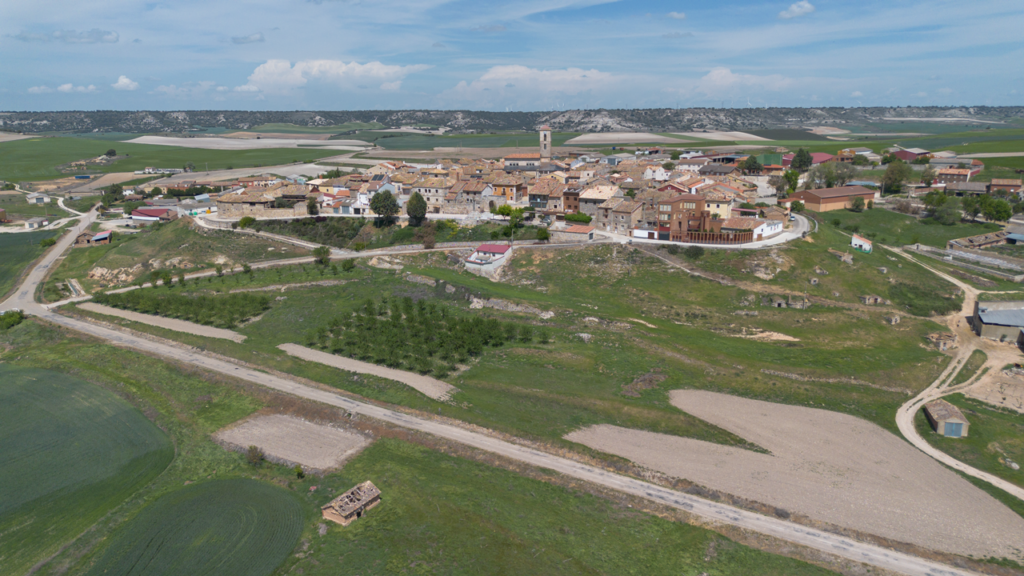
The Church of Saint Michael the Archangel, in the heart of Vertavillo, is a magnificent example of how a building can encapsulate centuries of architectural history. Its origins date back to the 13th century, when it was built in keeping with the emerging proto-Gothic styles of the time. Over the centuries, particularly during the 16th and 17th centuries, the church was extended and renovated, resulting in the blend of Romanesque, Gothic and Renaissance elements that we can admire today.
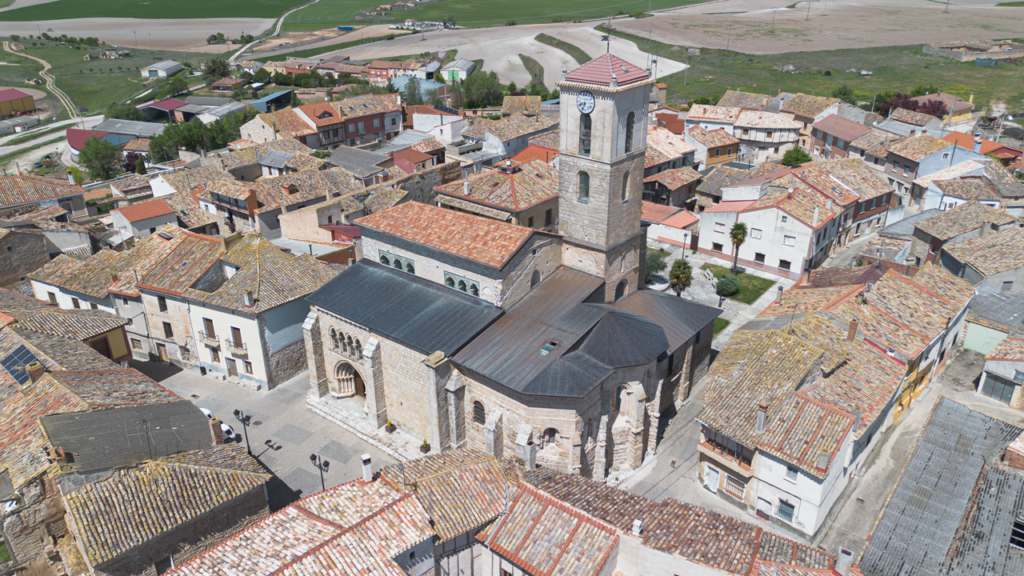
The exterior is notable for its solid limestone ashlar masonry and its two polygonal apses, which are of unequal size. Next to them stands the tower, built in the 17th century, whose height makes it one of the village’s most prominent landmarks. The southern façade, the most important, combines a pointed arch with several richly decorated archivolts and an elegant upper arcade of four window openings, featuring capitals adorned with fantastical figures such as harpies, centaurs and dragons.
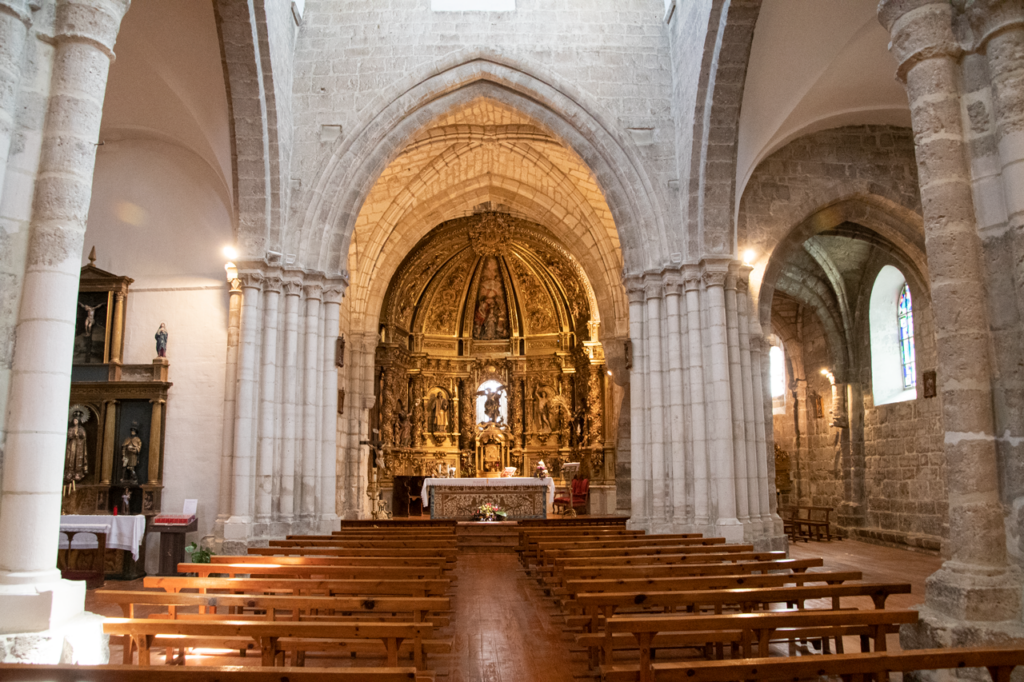
The floor plan of the church features three naves separated by circular pillars, most of which are covered by groin vaults resulting from the 1959 restoration. In contrast, the transept, the apses and the sacristy retain their medieval ribbed vaults, which recall the building’s Gothic origins. The main chapel boasts a particularly striking ceiling, with quatrefoil oculus windows that provide light and lend the space a monumental air.
The church also preserves various sculpted capitals and numerous stonemason’s marks, silent traces of the work of the master craftsmen who built it.