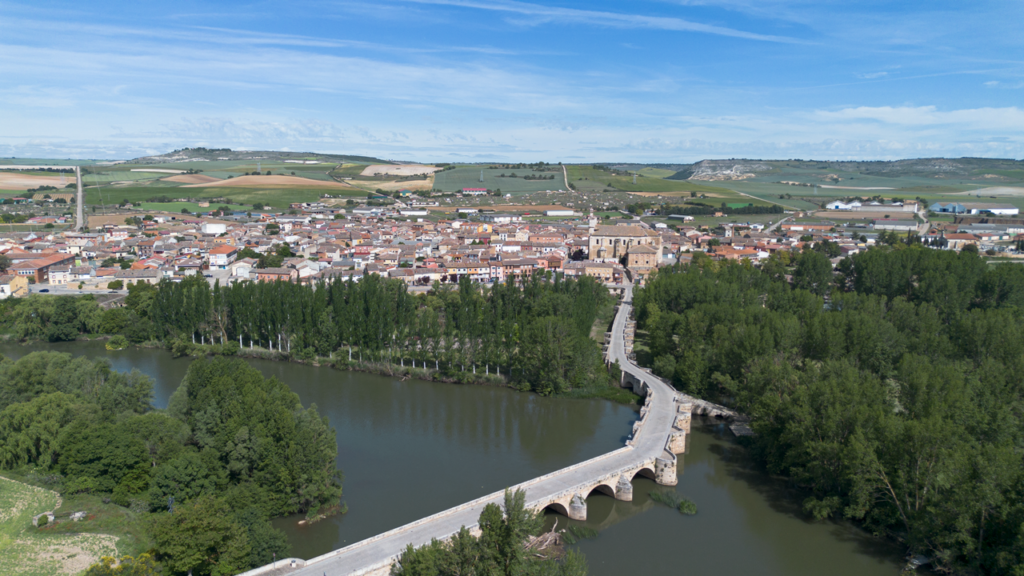
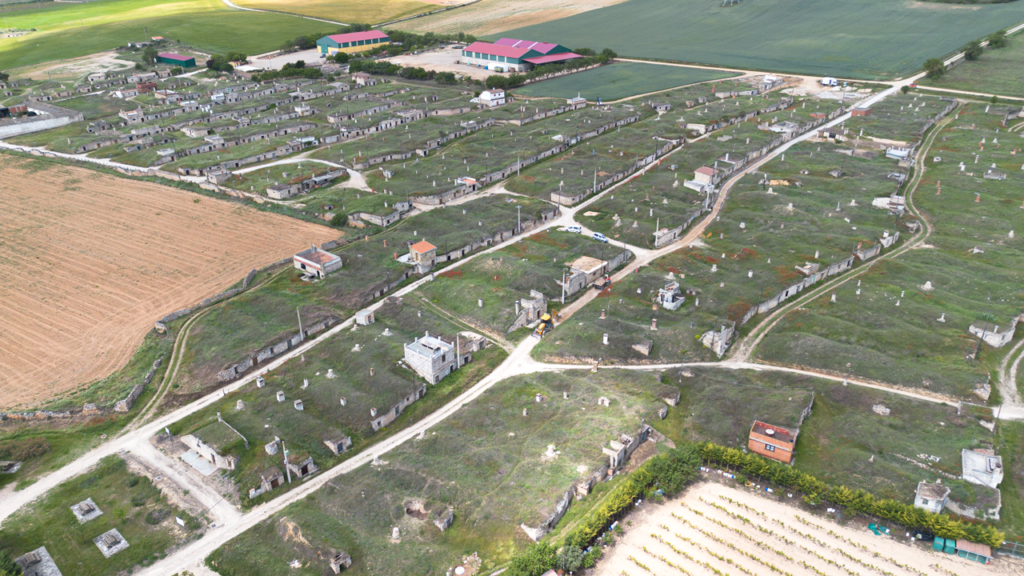
The Torquemada wine cellar district is one of the largest and most unique groups of underground wine cellars in Castile and León. It covers an area of over 120,000 square metres and comprises nearly five hundred cellars dug into the flat ground to the west of the town centre. In 2015, it was declared a Site of Cultural Interest, in the category of Ethnological Site.
The cellars are spread across five districts: Valdesalce, Ladredo, Barrionuevo, Paramillo and Carrovillamediana, with Ladredo being the largest and most representative. Unlike other wine cellar districts in the Cerrato region, in Torquemada the cellars were not dug into hillsides but directly beneath the ground, resulting in a regular layout based on straight streets running east to west, with stone-masonry façades facing north.
Its origins are linked to the development of vineyards and wine production, documented from the late 15th and early 16th centuries. Each wine cellar had specific areas for the production, fermentation and storage of wine, including galleries, wine presses, water wells and natural ventilation systems. The thermal stability and high humidity of the subsoil provided ideal conditions for ageing the wine.
For centuries, wine-making was fundamental to the local economy, reaching its peak between the 16th and 19th centuries. At the start of the 20th century, vine pests and economic changes led to its decline. Today, although wine is no longer produced on a widespread basis, the cellars are preserved as cultural heritage and as spaces for social and recreational use.