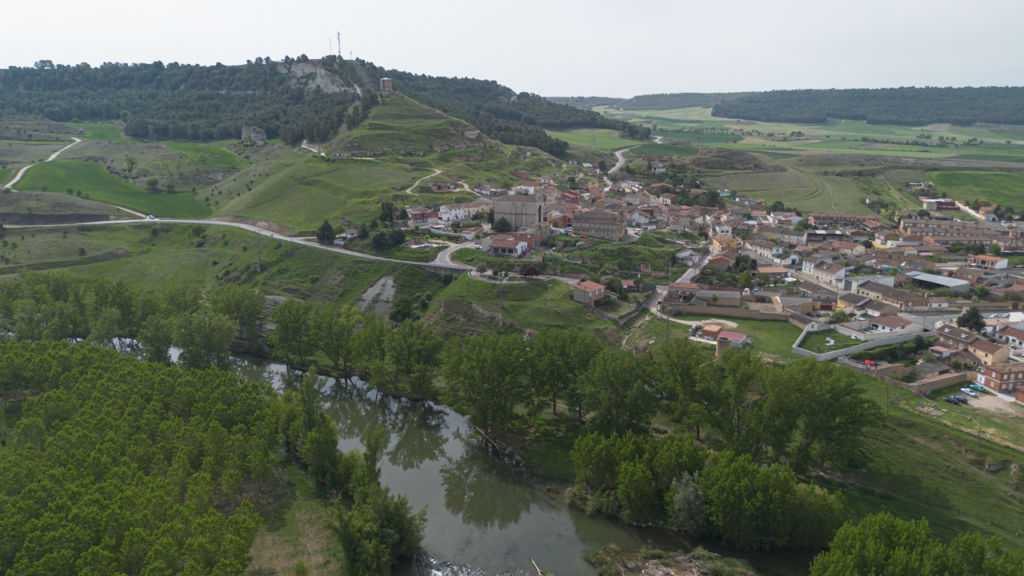
At the top of the Cuesta de la Butrera stand the remains of the Tariego de Cerrato optical telegraph tower, a unique structure that serves as a reminder of one of the earliest rapid communication systems in Spanish history. This tower formed part of the Isabelline telegraph network, set up during the Second Carlist War to transmit news swiftly from the front in the Basque Country to Madrid. Each message was relayed from one tower to another via visual signals, linking stations such as those at Dueñas and Villamediana, which were clearly visible from Tariego.
The tower had a square floor plan, with sides measuring around seven metres, and stood three storeys high. The two lower levels were built of ashlar, whilst the upper sections were constructed of brick. At the top stood the platform for the optical mechanism, a system of movable arms capable of generating combinations that represented coded messages.
Although today all we can see are its ruins, it still has an imposing presence.
The tower, which has sometimes been mistaken for an ancient defensive structure, is in fact a testament to a pivotal moment when Tariego de Cerrato played a part in a pioneering technological advance. Its outline continues to dominate the village, serving as a reminder of how this small enclave in the Cerrato region came to form part of one of the most innovative communication networks of the 19th century.