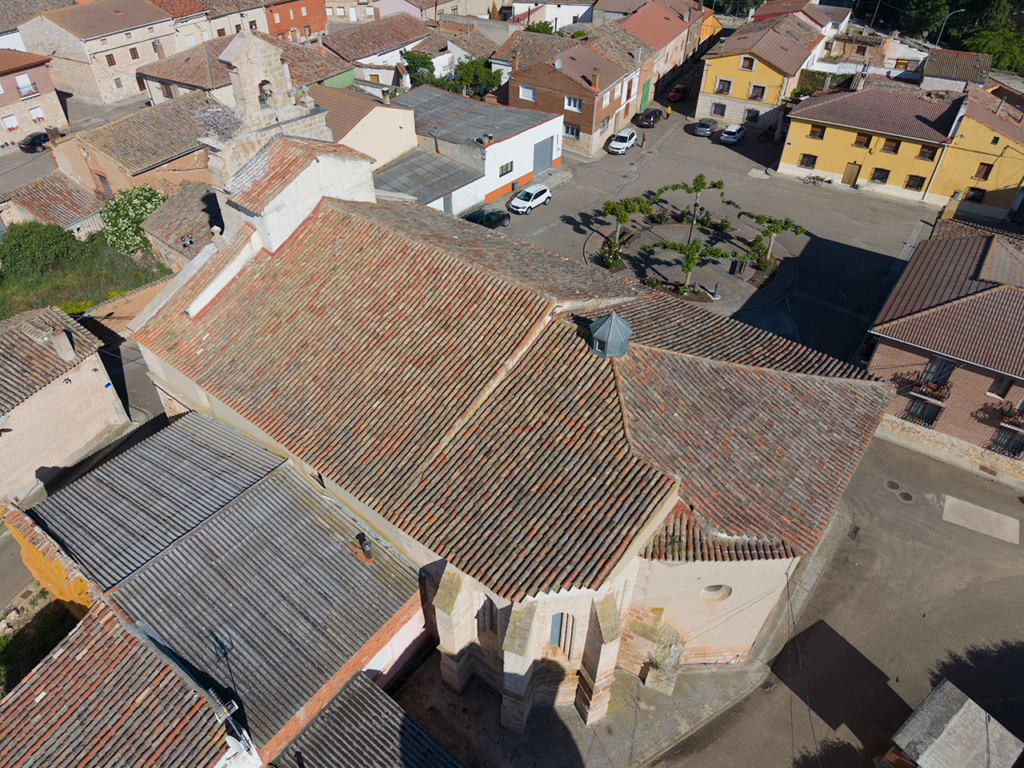
The Church of Saint Stephen is the result of a long history of construction in which two major artistic periods coexist. On the one hand, it retains the original Romanesque features; on the other, a major Baroque renovation transformed its appearance over the centuries. This overlapping of styles makes the building a valuable testament to the town’s historical and artistic evolution.
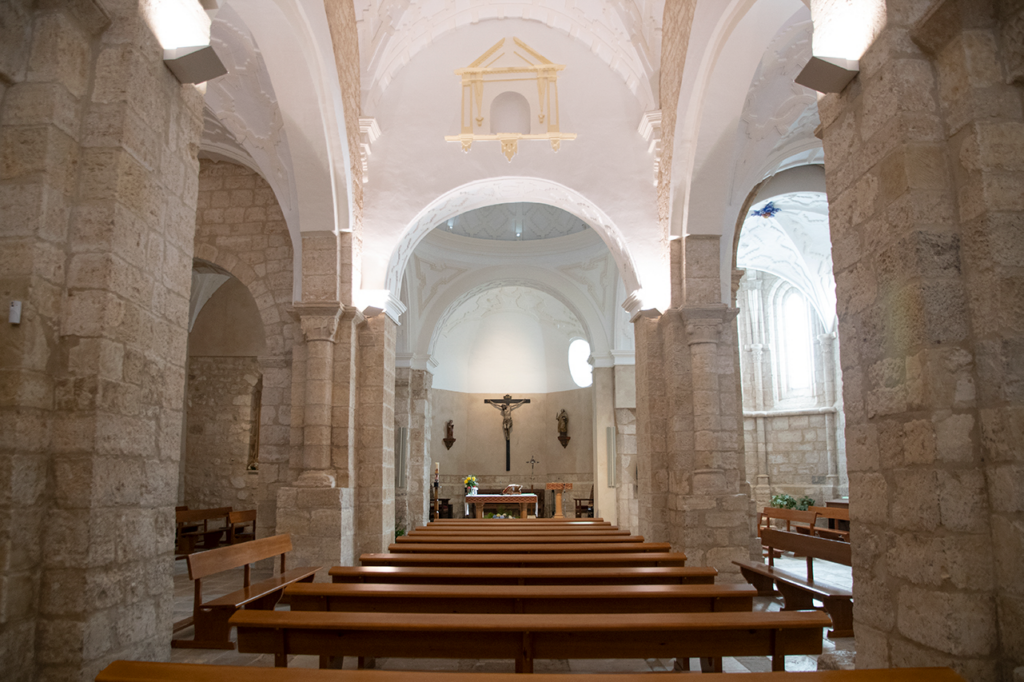
Inside, several decorated capitals are worthy of note, as are various tombstones and plaques. Particularly noteworthy is that of Pedro Celada, one of the architects of the bridge that gives the town its name, whose memory remains forever linked to this place.
From its Romanesque phase, three pilasters with capitals dating from the 10th and 11th centuries have been preserved, as well as the portico, which belongs to the same style and period. The rest of the building is Gothic in style, reflecting the subsequent transformations to which the church was subjected.
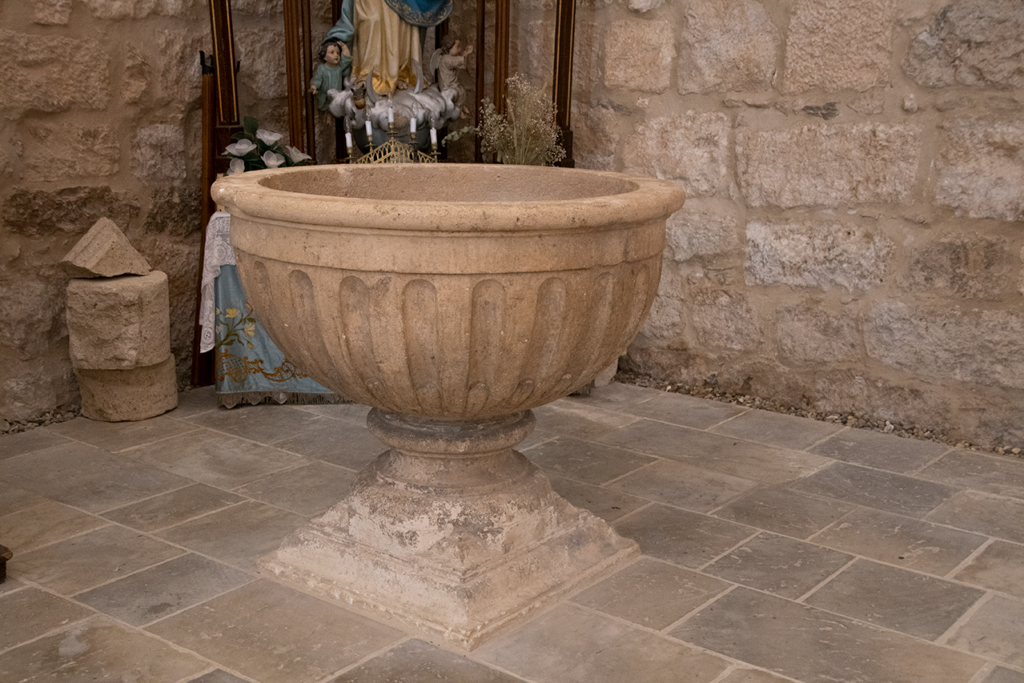
In the Gospel nave, there is a «gadrooned», or fluted, baptismal font dating from the late 16th century, and in the presbytery, a Renaissance crucifix from the second half of the 16th century, one of the oldest liturgical artefacts.
The church retains two Neoclassical altarpieces: the high altarpiece, dating from the early 19th century, and another located in the Epistle nave, presided over by a sculpture of the Virgin from the same century. Both works interact with pieces from earlier periods, reflecting the overlapping styles and the historical and cumulative nature of the building.