The Church of Our Lady of the Assumption has its origins in a Romanesque church built between the 12th and 13th centuries, of which several elements are still visible today. Over time, the building was extended and extensively renovated, particularly during the 15th and 16th centuries, giving it its present appearance.
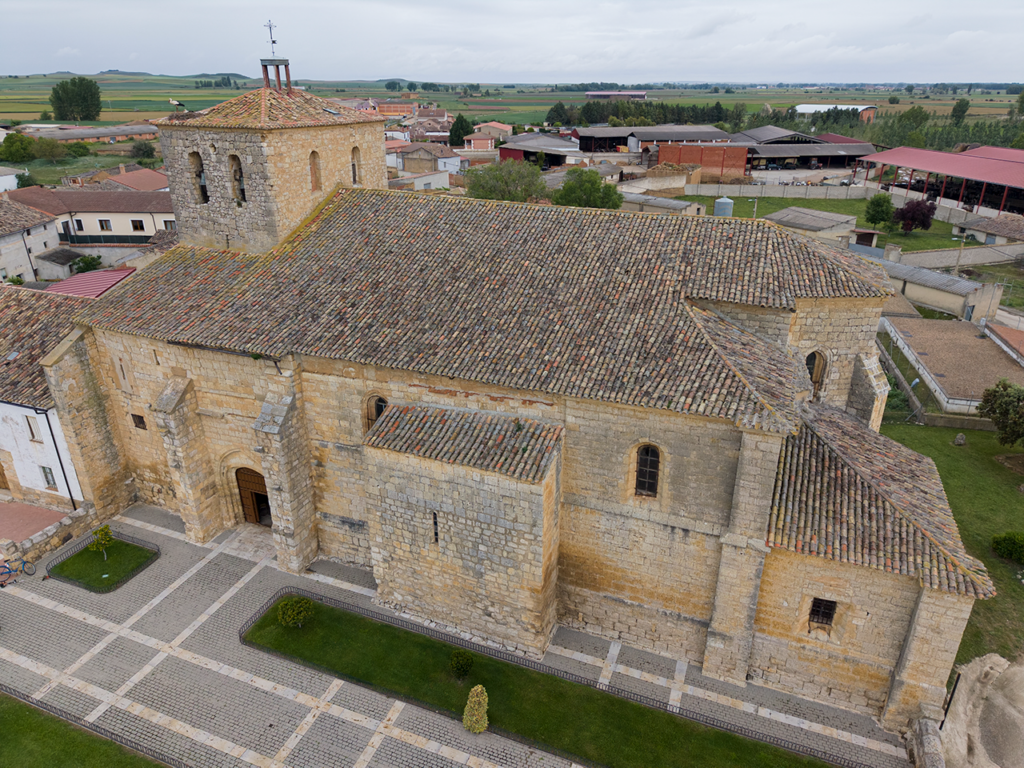
The exterior clearly reveals this architectural evolution. The north wall still has Romanesque semicircular windows and the remains of an old, now-bricked-up doorway. Corbels marking the original height of the roof of the original church are also visible. The tower, situated at the west end of the church, was built in the 16th century and replaced an earlier bell gable.
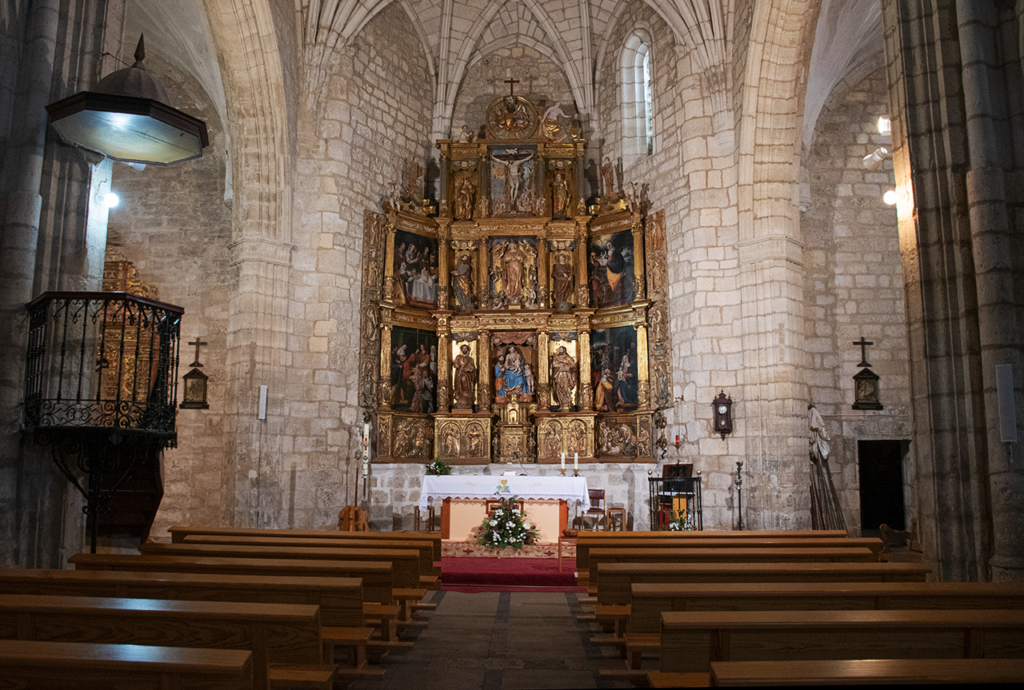
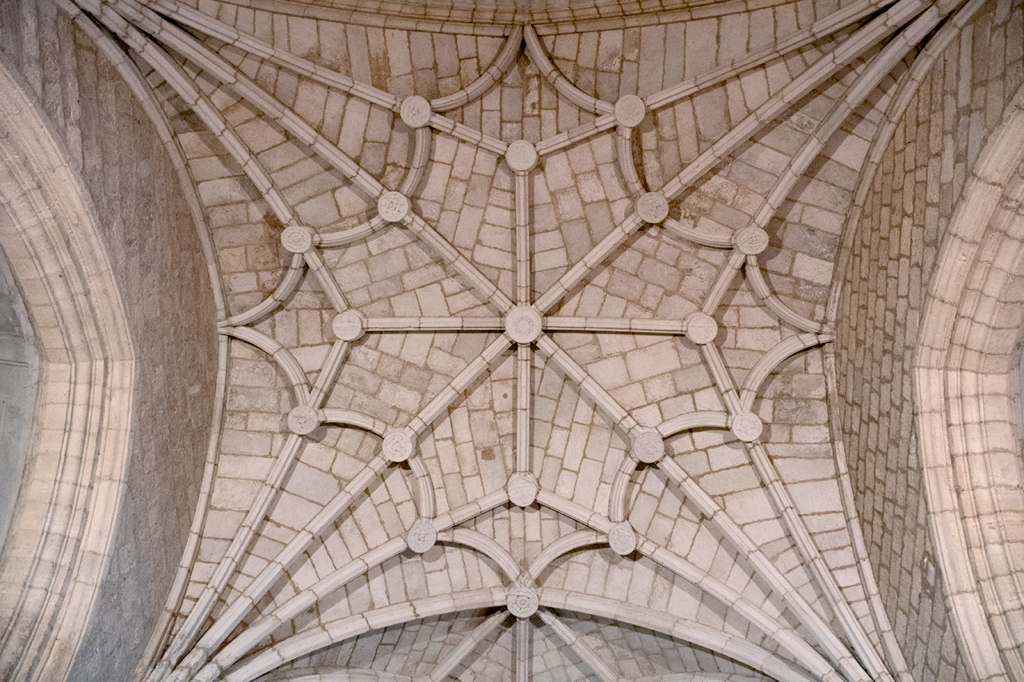
The interior is organised into three naves separated by thick composite pillars supporting pointed arches. The ceilings combine groined vaults and star-shaped ribbed vaults, constructed in the second third of the 16th century. On one of the pillars near the main chapel, we can still see an inscription dated 1537 relating to these works.
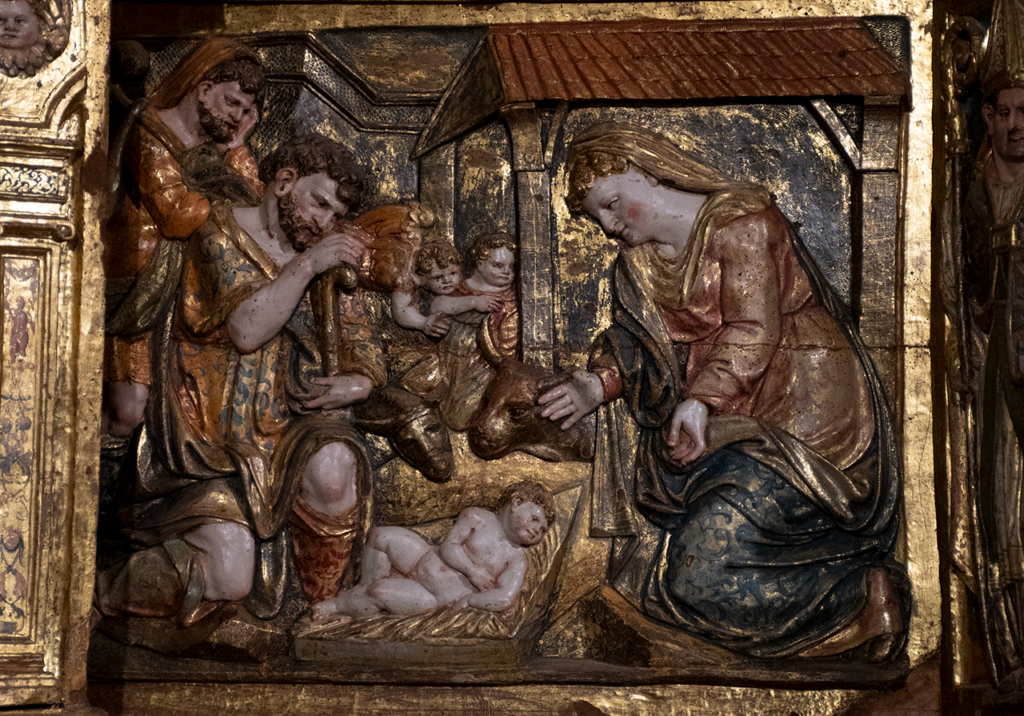
Notable among the artistic elements are the Renaissance-style high altarpiece, the 17th-century altarpiece of Saint Francis, and the historic organ.
A side chapel houses the image of the Virgin of La Vega, a 13th-century carving from the chapel located on the outskirts of the village. It displays features characteristic of the transition from the Romanesque to the Gothic period and is one of the oldest pieces of local heritage.