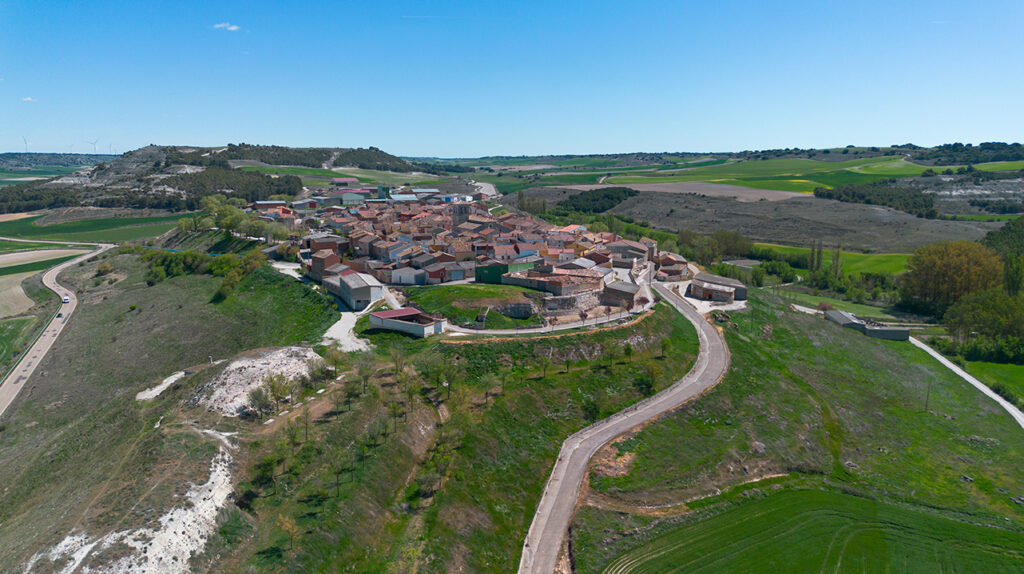
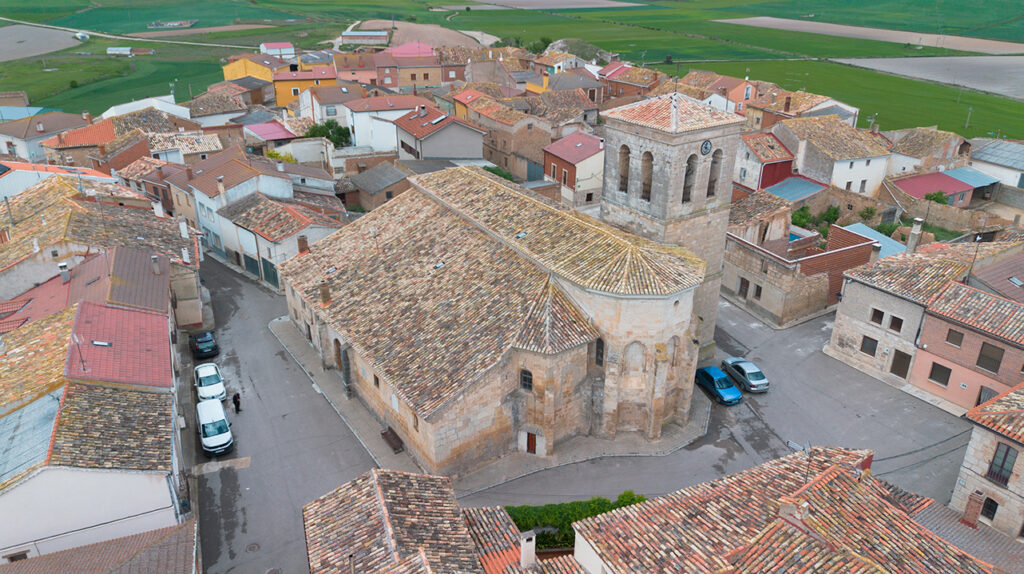
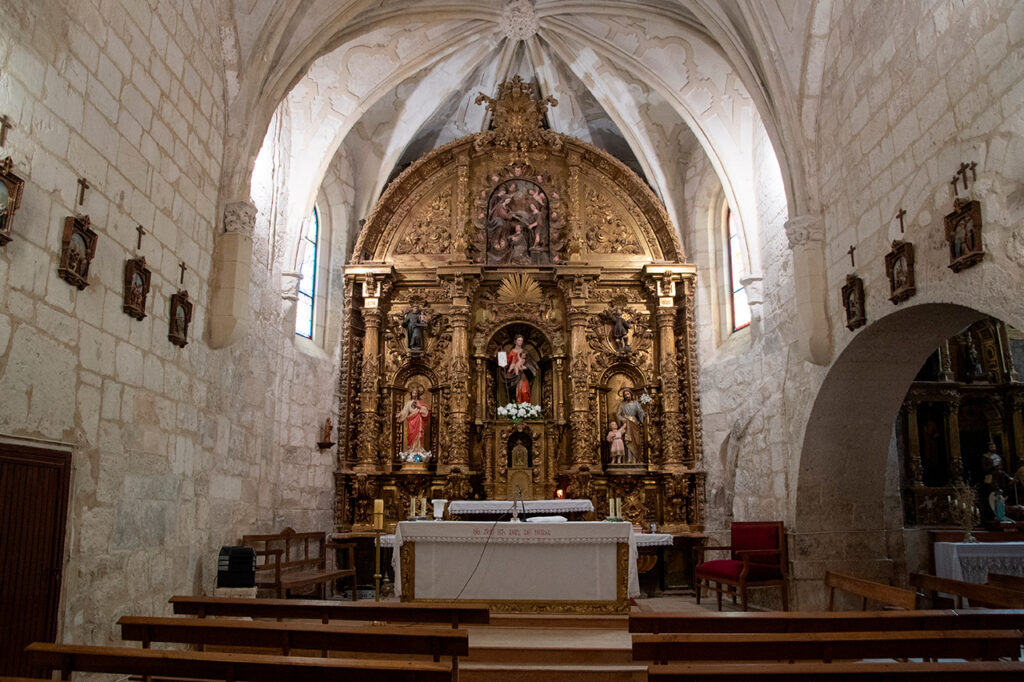
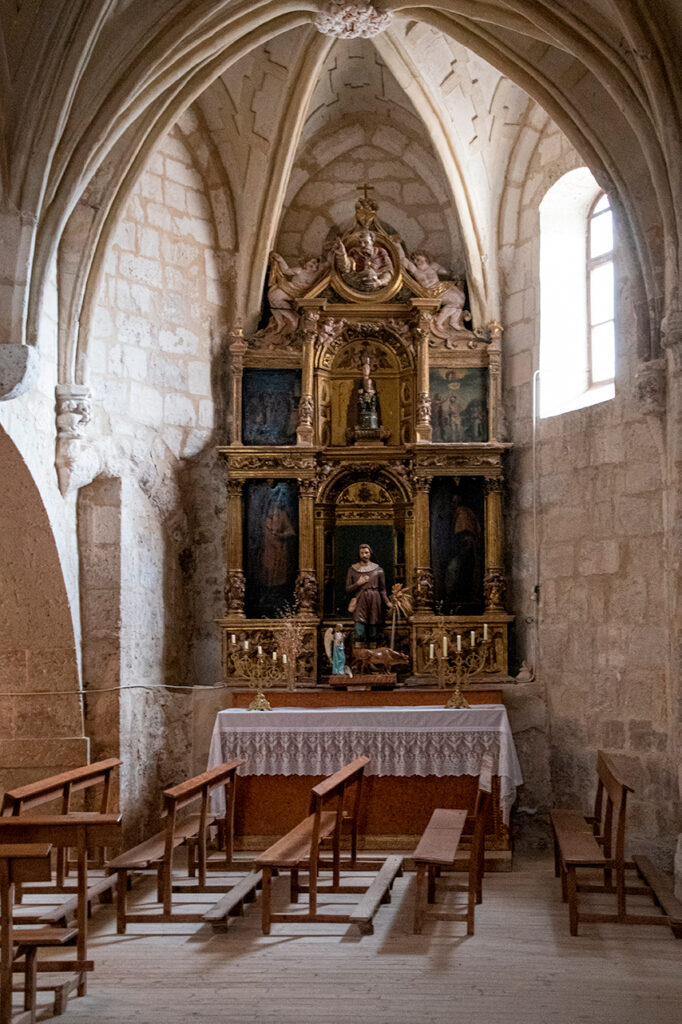
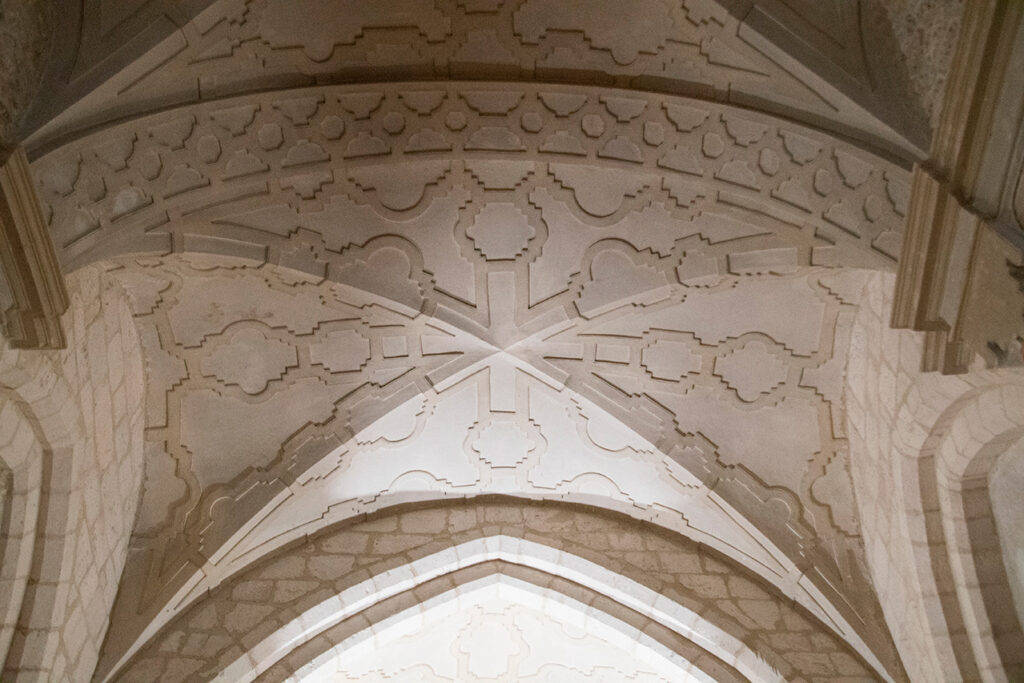
Construction of the Church of Nuestra Señora de la Paz, devoted to the Virgin Mary of reconciliation and harmony, began in the 12th century in the Romanesque style, although it soon incorporated Gothic features that can be seen today, particularly in its polygonal apses, which are illuminated by tall pointed windows and reinforced by buttresses.
The church has a rectangular floor plan with three naves and four sections, supported by sturdy limestone ashlar pillars.
Much of the current roof work is the result of Baroque renovations, carried out in brick, although the apses retain their ribbed vaults and stone webbing.
Notable features of the exterior are its two Romanesque portals. The southern one is the most ornate, with four semicircular archivolts resting on columns and capitals decorated with birds, facing lions and plant motifs. Its chambranle, or frame, features a striking array of figures: dragons, fish and intertwined quadrupeds. The simpler western façade has three archivolts and an oculus that illuminates the interior.
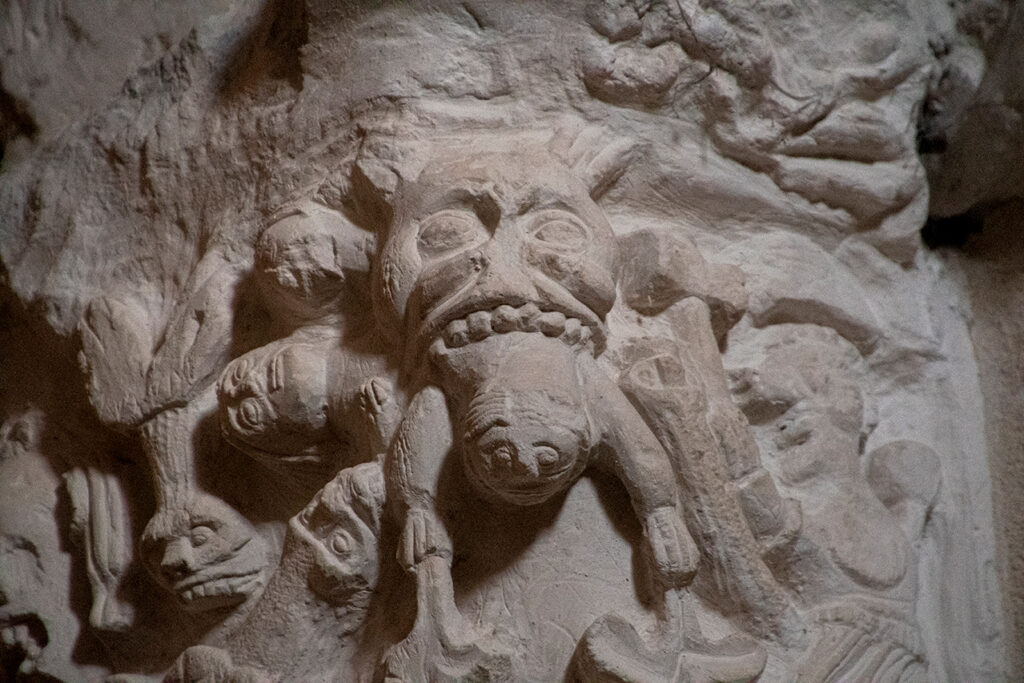
The church houses a valuable collection of capitals. The oldest, in the late Romanesque style, depict facing animals, masks, centaurs and scenes such as Daniel in the lions’ den. At the chevet, the Gothic capitals display fleshy leaves and fantastical faces, reflecting the evolution of the sculptural language.
Notable among the religious artefacts is the 15th-century image of Cristo del Amparo, or Christ of Protection and, in the sacristy, a 16th-century walnut vestment chest, finely carved with scenes from the Stations of the Cross.