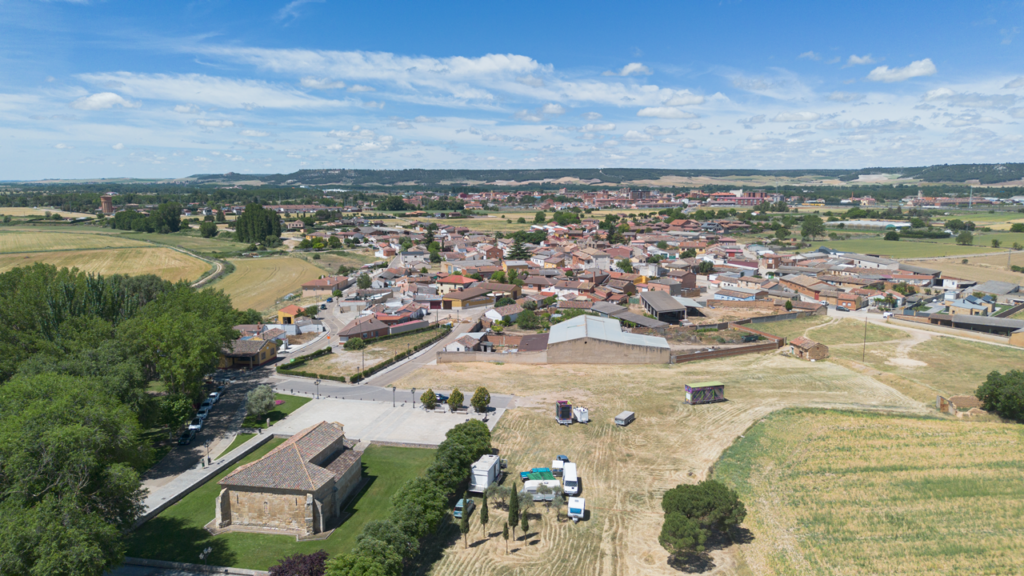
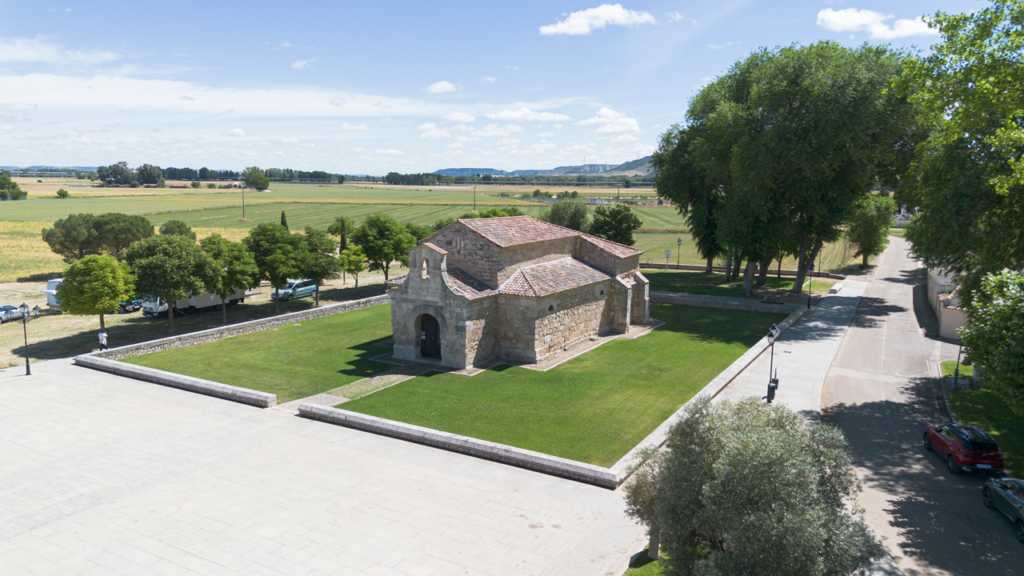
The Basilica of San Juan de Baños is one of the most extraordinary monuments in Spanish history. It is a church that has stood for over 1,400 years. It was commissioned in 661 by the Visigoth king Recceswinth and is the oldest surviving Christian building in Spain whose foundation date is known with absolute certainty.
However, the history of this site begins much earlier. Standing next to the church is the Fuente de San Juan, a spring already considered sacred in Roman times. Excavations carried out in the surrounding area unearthed the Altar of the Nymphs, a votive offering dedicated to the goddesses who protected water. This artefact, now preserved in the National Archaeological Museum, confirms the existence of an ancient pagan place of worship centuries before the arrival of the Visigoths.
Tradition has it that King Recceswinth, suffering from a kidney ailment, was healed by these waters. Impressed by their properties, he decided to Christianise the site and build a church dedicated to St John the Baptist. Hence the creation of a basilica which, even today, retains its original 7th-century structure.
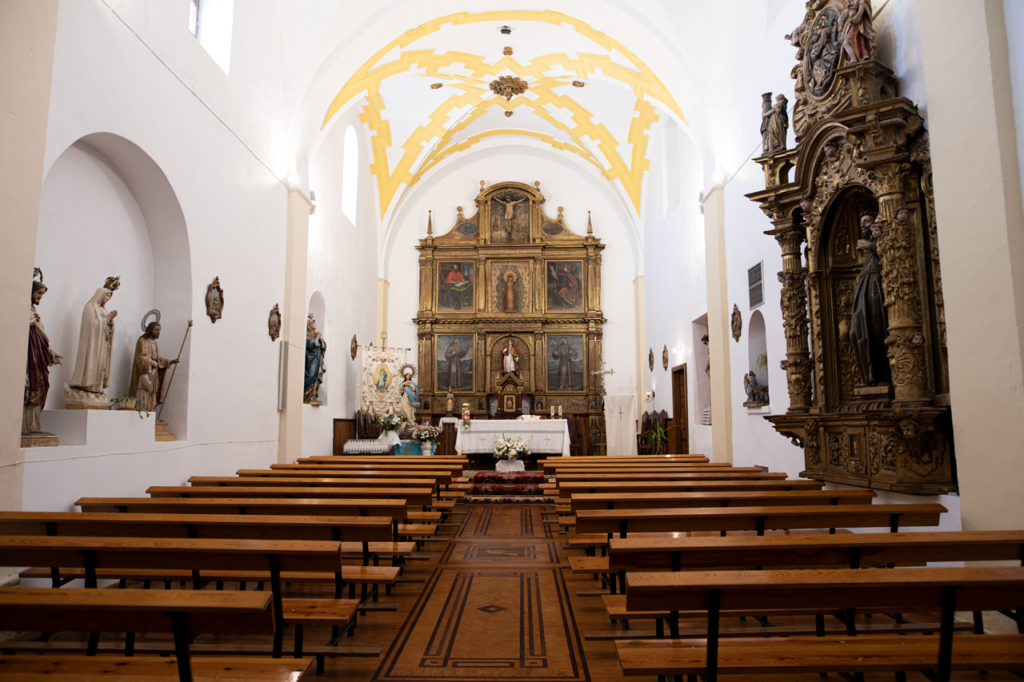
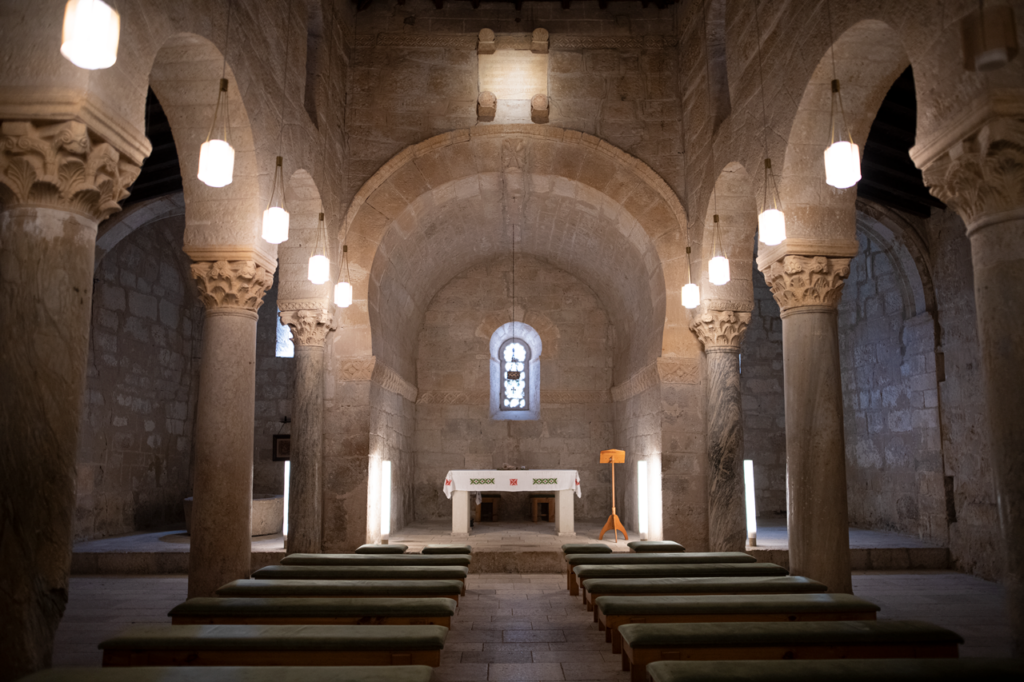
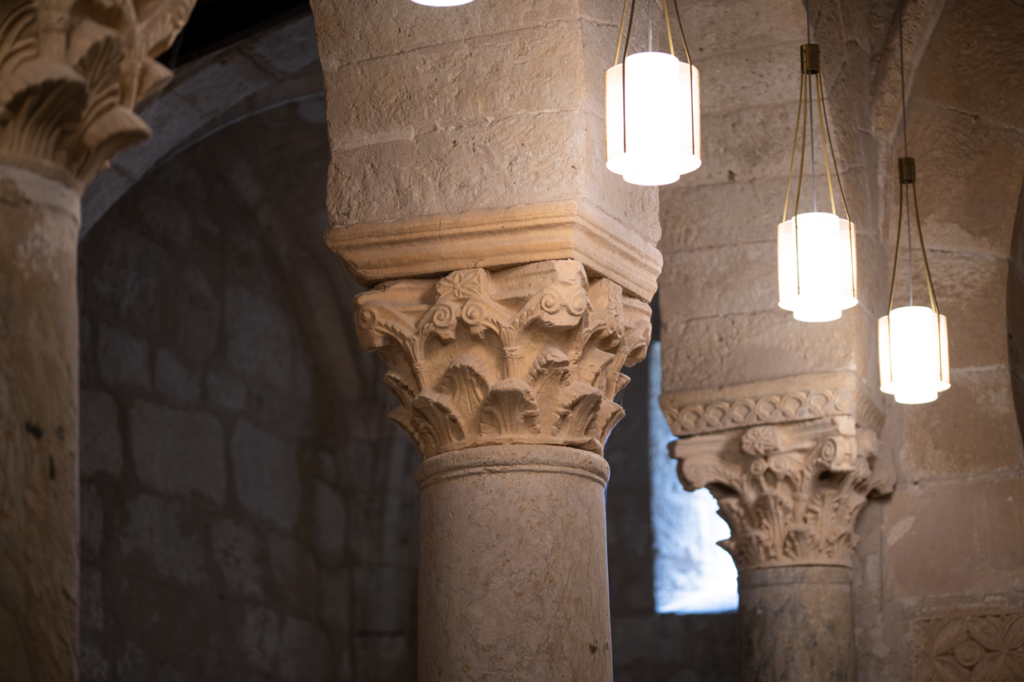
Inside, the space is organised into three naves separated by columns reclaimed from the Roman period. Resting on these columns are horseshoe arches characteristic of Visigothic art, which lend the whole structure a sense of balance and solemnity. The light, filtered through the small openings, creates an intimate atmosphere that enhances the verticality of the arches and the purity of the lines.
The chevet retains its original 7th-century layout: a central apse and two side chambers that may have been used for liturgical or devotional purposes. The apse features the foundation inscription, an exceptional record that specifically mentions King Recceswinth and the year 661.
The stone screens, finely carved with geometric and interlaced motifs, separated the space for the faithful from the area reserved for the clergy, reflecting Visigothic liturgy.
Taken as a whole, this interior brings together some of the most representative and best-preserved elements of European Visigothic art.