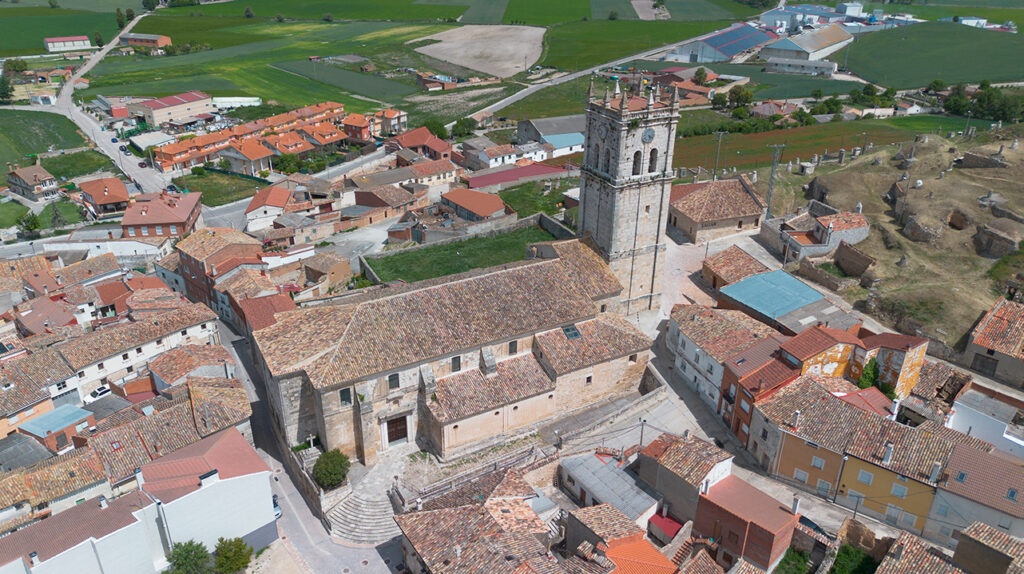
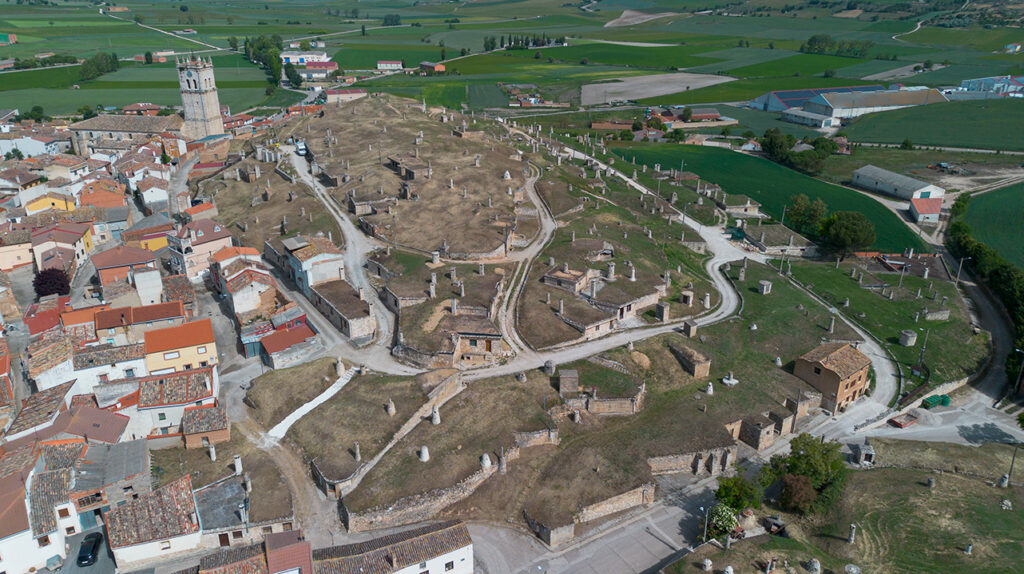
On the outskirts of the town centre of Baltanás, on the slopes of the hill known as El Castillo, there is a veritable labyrinth carved into the earth: three hundred and seventy-four wine cellars dug into the ground at varying depths, forming a unique landscape that tells a story of wine, hard work and tradition. There is another area, known as Las Erillas, comprising sixty-nine wine cellars.
Work began on these cellars in 1543, taking advantage of the clay soil, which is ideal for creating spaces that stand the test of time. Underground, the temperature and humidity remain constant throughout the year, providing perfect conditions for making and storing wine. Consequently, every staircase leading down into the cellars opens onto vaulted galleries where vats, wine presses and grape-harvesting tools once stood.
Outside, small chimneys, vents and loading chutes protrude from the hillside, giving the area an almost lunar appearance. These conduits provided ventilation for the cellars and allowed the gases from fermentation to be released, an ingenious system born of centuries of experience.
For generations, the cellars were much more than just workspaces: they were also places for people to meet, celebrate and pass on knowledge. Today, this excavated district is a valuable cultural heritage site, protected as a Site of Cultural Interest since 2016, and a symbol of the deep connection between Baltanás, its landscape and the culture of wine.