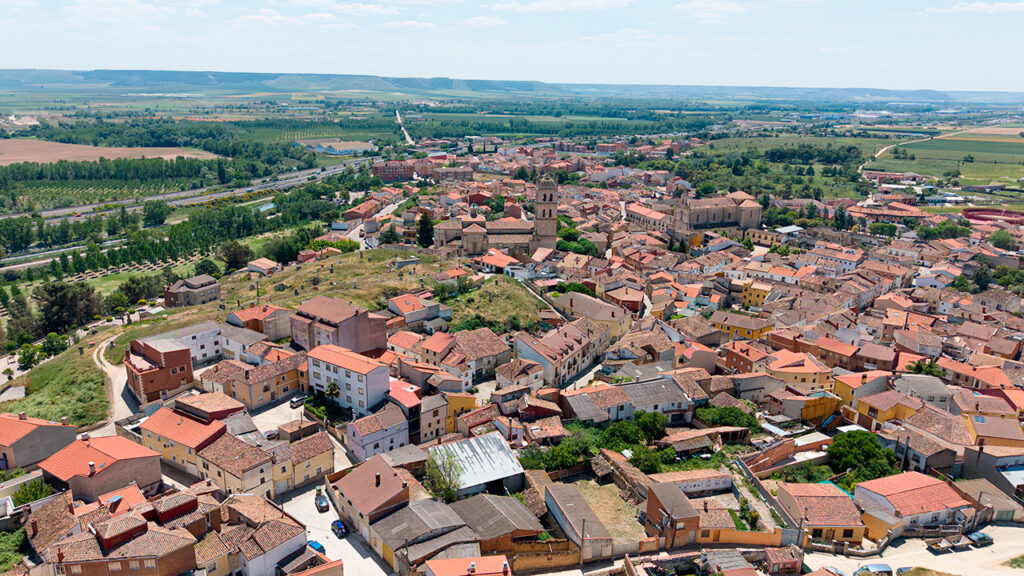
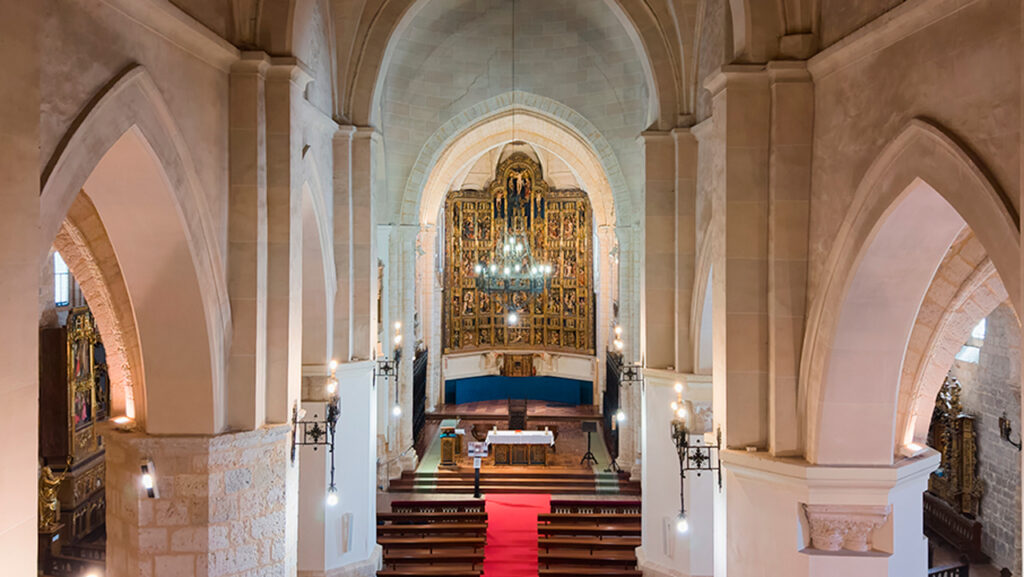
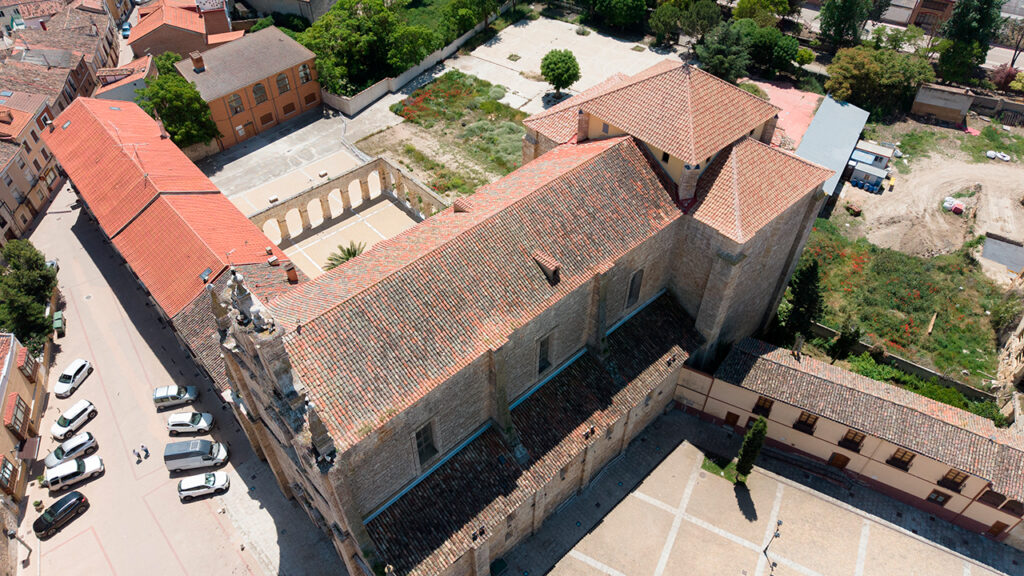
The church of Saint Mary of the Assumption stands at the highest point in Dueñas, overlooking the town since the late 12th century. Its architecture, a blend of Romanesque and Gothic styles, features a three-nave floor plan, with a barely pronounced transept and a chevet consisting of a central polygonal apse and a semicircular one, whilst the apse on the epistle side was replaced by the sacristy in the 18th century.
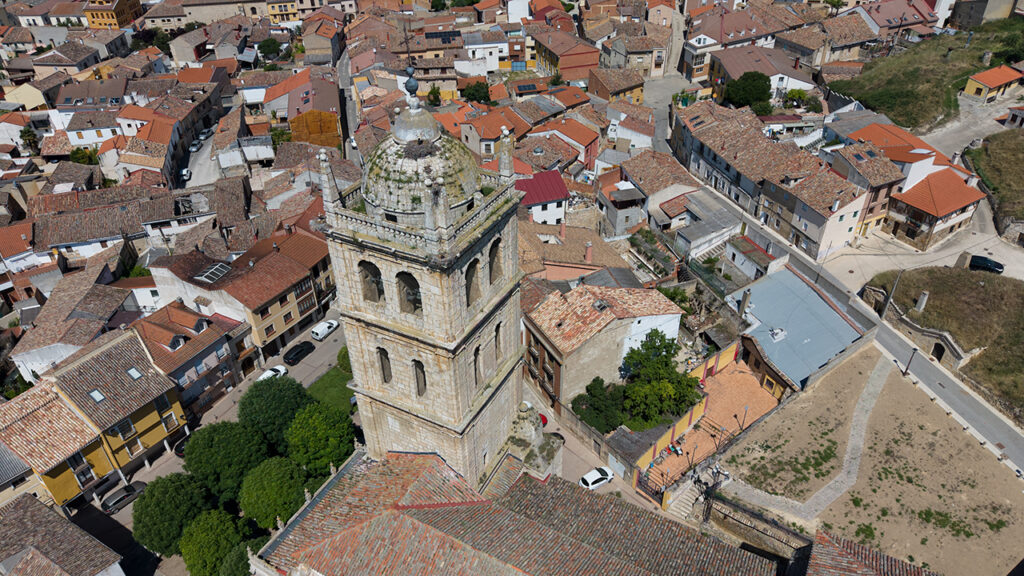
The naves, covered with ribbed and groin vaults, are supported on octagonal pillars by pointed arches. Above the transept there is an external tower housing a Baroque cupola, illuminated by oculi and topped with a lantern; in fact, this construction is often referred to as a “lantern tower”. The tower, situated at the entrance of the church, was completed in 1589 based on plans by Alonso de Tolosa.
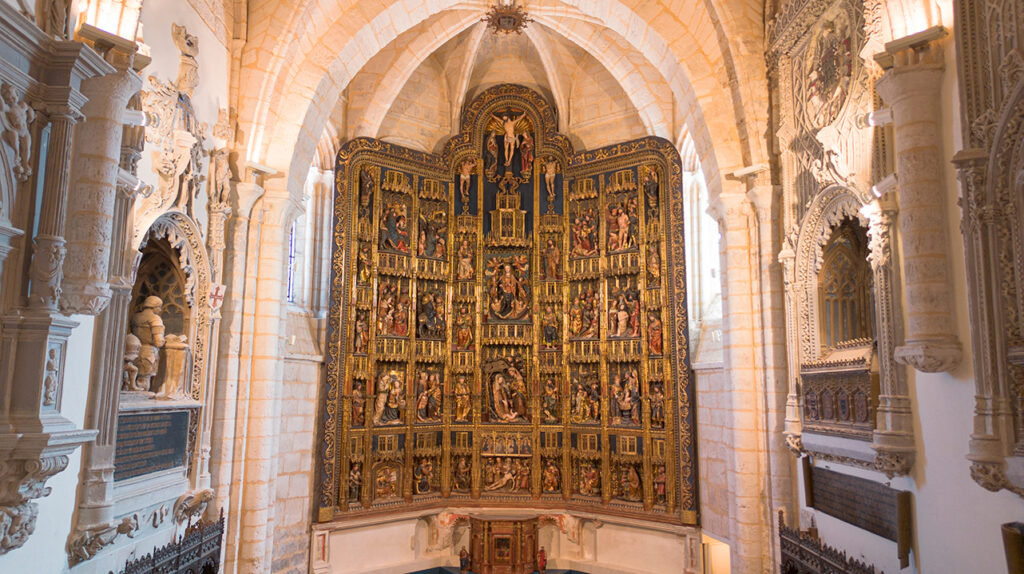
A notable feature inside the church is the extraordinary high altarpiece, created between 1510 and 1518 by the Mechelen-born sculptor Antonio de Malinas, Giralte of Brussels, Pedro Manso and Alonso de Ampudia. Considered a masterpiece of late Castilian Gothic art, it depicts scenes from the lives of the Virgin Mary and Christ.
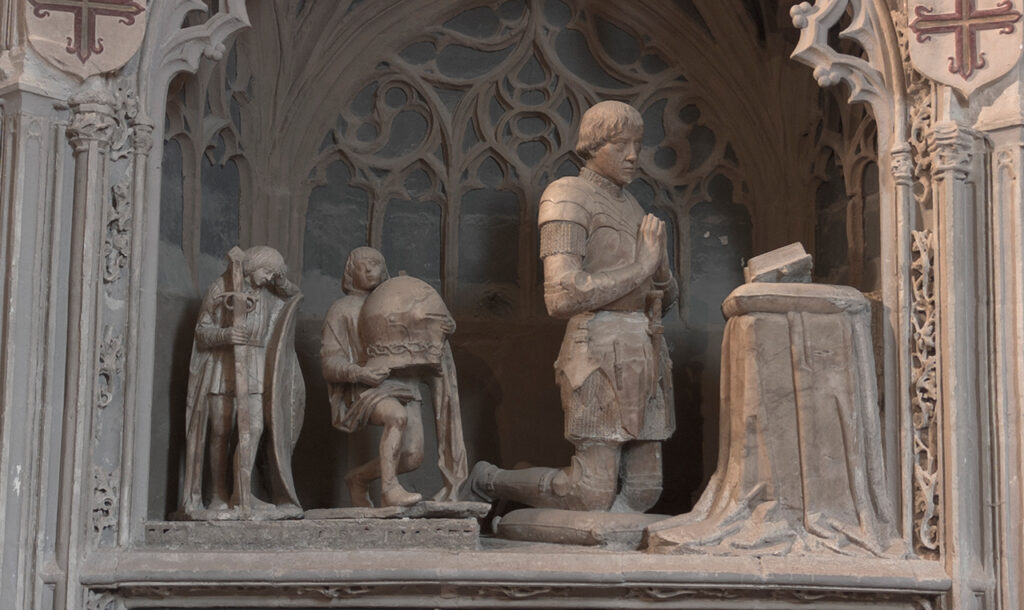
The main chapel houses the tombs of the Counts of Buendía, dating from the 15th and 16th centuries, and the stonework is particularly unique, combining Gothic tracery with motifs of savages, possibly linked to the new geographical discoveries.
The church also houses a remarkable collection of artworks, including a 13th-century Gothic crucifix and funerary urn; the altarpiece of Saint Ildefonsus, a synthesis of Flemish art and the early Renaissance; sculptures by Gregorio Fernández, such as Saint Isidore the Labourer; and Baroque pieces from the Madrid school.
Reflecting the worldview of the Early Modern period, the baptismal chapel houses the 17th-century ‘Mystical Itinerary’, a symbolic representation of the universe and the path to heaven. The organ, dating from 1754, and the modern altarpiece of the Virgin of La O, patron saint of Dueñas, complete this outstanding collection.
The church also has a small parish museum housing valuable silverware donated by the Acuña family and an exceptional Ecce Homo by Diego de Siloé.