VILLAVIUDAS

Video

Play Video

Audios

Iglesia de Nuestra señora de la Asunción, Valle de Cerrato

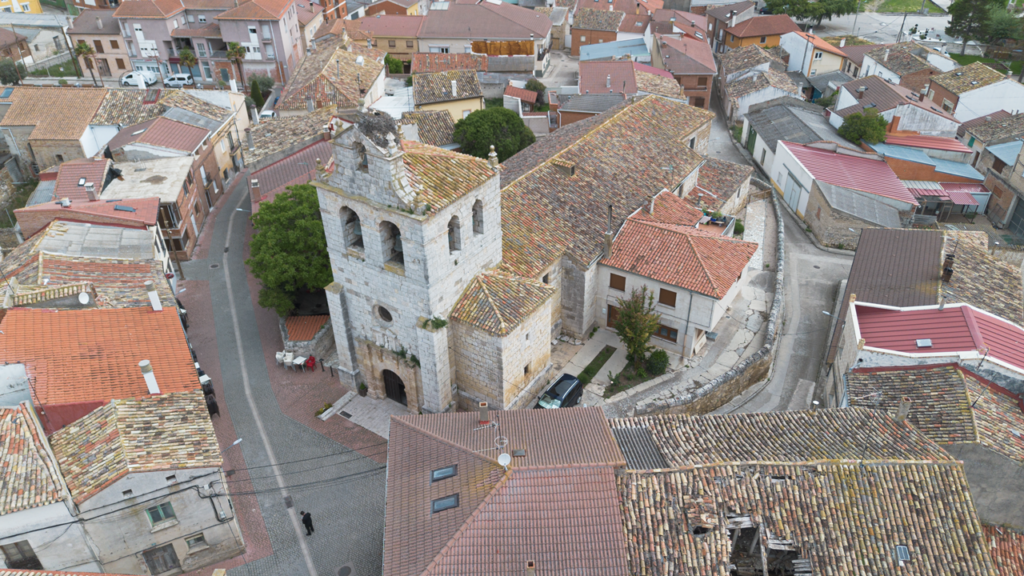
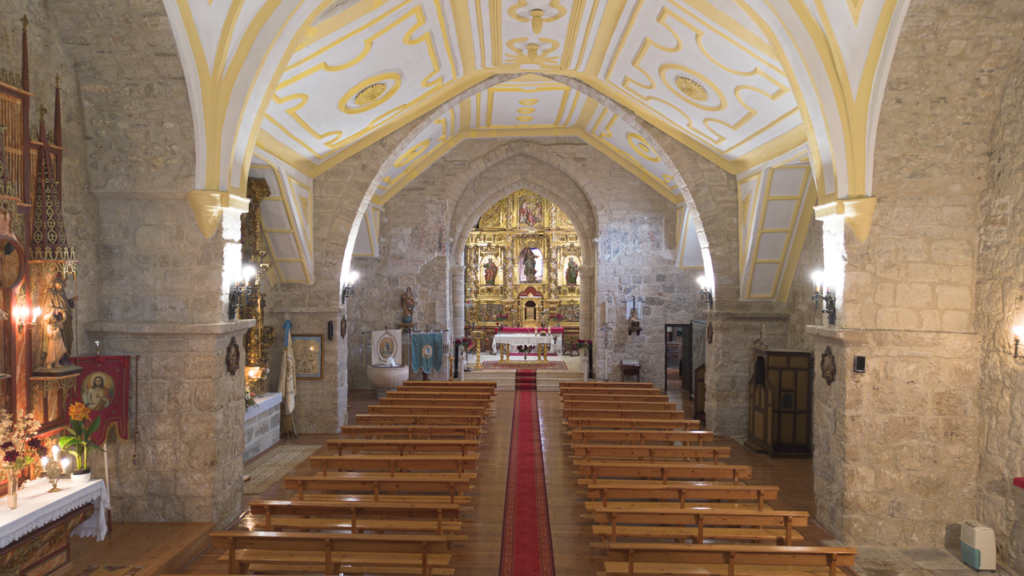
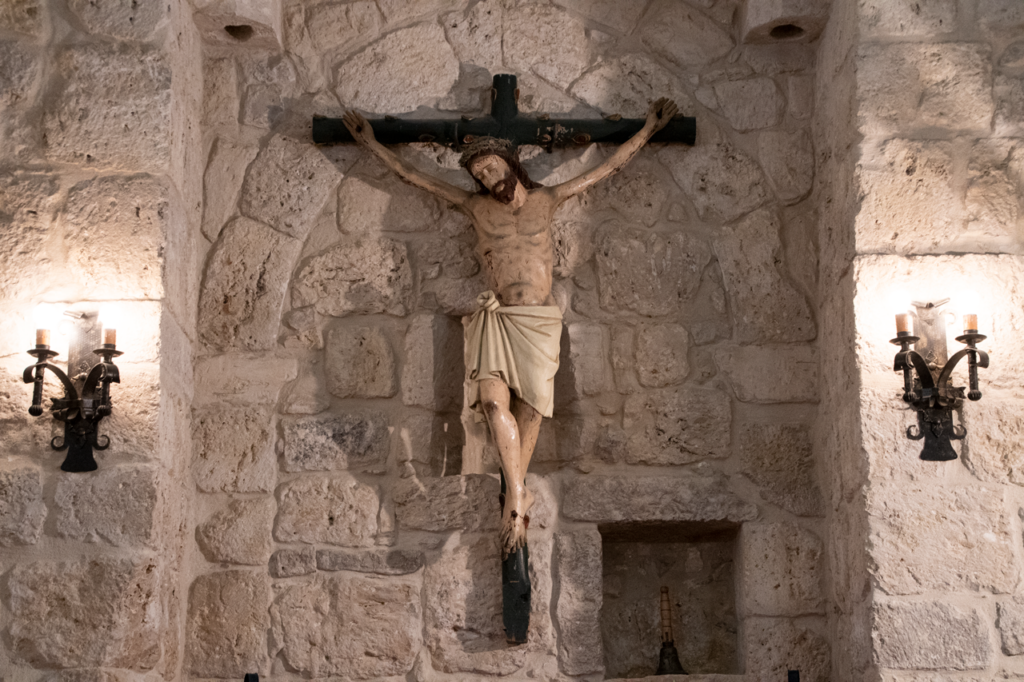
The Church of Saint Mary of the Assumption stands at the heart of Villaviudas and is, without doubt, the town’s most iconic monument. Its origins date back to the 13th and 14th centuries, when it was built in the Castilian rural Gothic style. Some essential elements from that early period have been preserved, such as the ribbed vault of the main chapel and the pointed arches that connect its four interior bays. The building, constructed entirely of stone, has a simple rectangular floor plan. Over the centuries, particularly in the 17th and 18th centuries, the church underwent renovations that added new sections and finishes. The current roof of the naves, consisting of groin vaults, is decorated with Baroque plasterwork that brings light, dynamism and an interesting contrast to the medieval austerity. The tower, visible from various points in the village, was added in the 18th century by the master stonemason Juan Charcán, from Castrojeriz. Its style is bold and balanced, reflecting the religious architecture of its time. Inside, elements of spiritual and historical value are also preserved, such as the image of the Christ of Miracles, from the former chapel of the same name. The church, still in use today, continues to be a meeting place for traditional celebrations and festivals.

Just over a kilometre from Villaviudas, on the road to Baltanás, lies one of the most evocative sites in the municipality: the medieval abandoned village of Tablada. Situated on a small plateau or tabla (hence its name), this ancient settlement is referred to as Tabulata in documents dating back as far as the 10th century. In medieval times, it had a parish church dedicated to Saint Olalla, which over time came to function as a chapel before disappearing completely. Today, the remains of an old mansion can still be made out amongst the vegetation. In the 19th century, Tablada took on new historical significance when it became the retreat of the politician Manuel Ruiz Zorrilla, one of the most prominent figures of Spanish liberalism. From here, he spearheaded pioneering initiatives for the modernisation of the countryside, such as the introduction of advanced agricultural machinery in the pastures of Dehesa de Tablada, including the first steam plough used in Spain, as well as new techniques, seeds and livestock breeds, turning this spot into a benchmark for agricultural innovation. The area retains a special charm today, enhanced by the well-known Paseo de las Lilas, an ascending path flanked by lilac trees that leads to the top of the plateau, from where one can enjoy a privileged view of the surroundings. In addition to its historical interest, Tablada has significant natural and ethnographic value: the plateau is surrounded by native vegetation and, in the surrounding area, you can still make out ancient dug-out cellars and other traditional structures associated with farming.

360 Tour

Photo Gallery

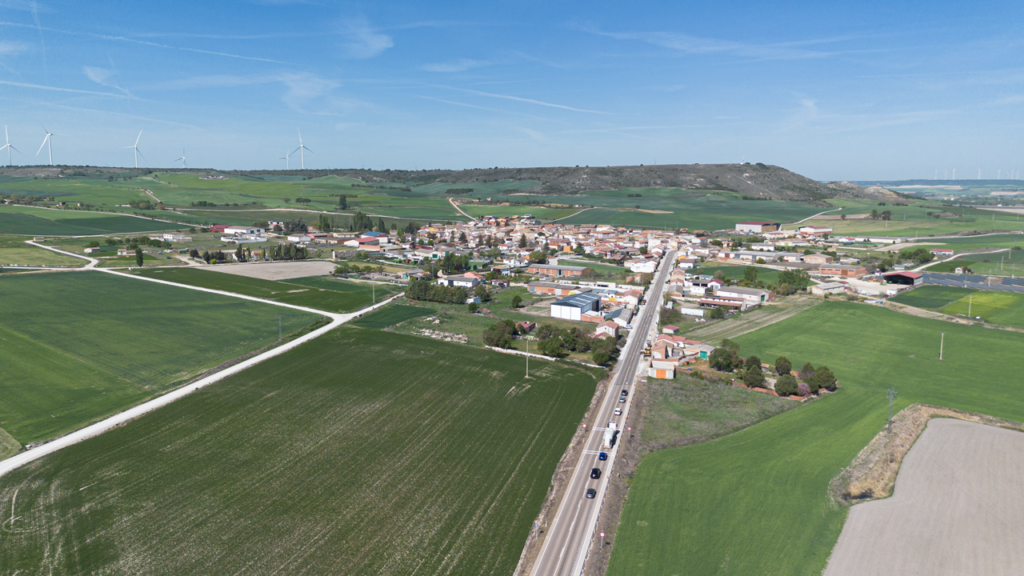
Panorámica aérea de Villaviudas, rodeado de campos de cultivo. Al fondo los páramos, sobre los que se alzan aerogeneradores.
Panorámica aérea de la iglesia de Nuestra Señora de la Asunción de Villaviudas. Hay un gran nido de cigüeña en lo alto de la torre, apoyado en la espadaña.
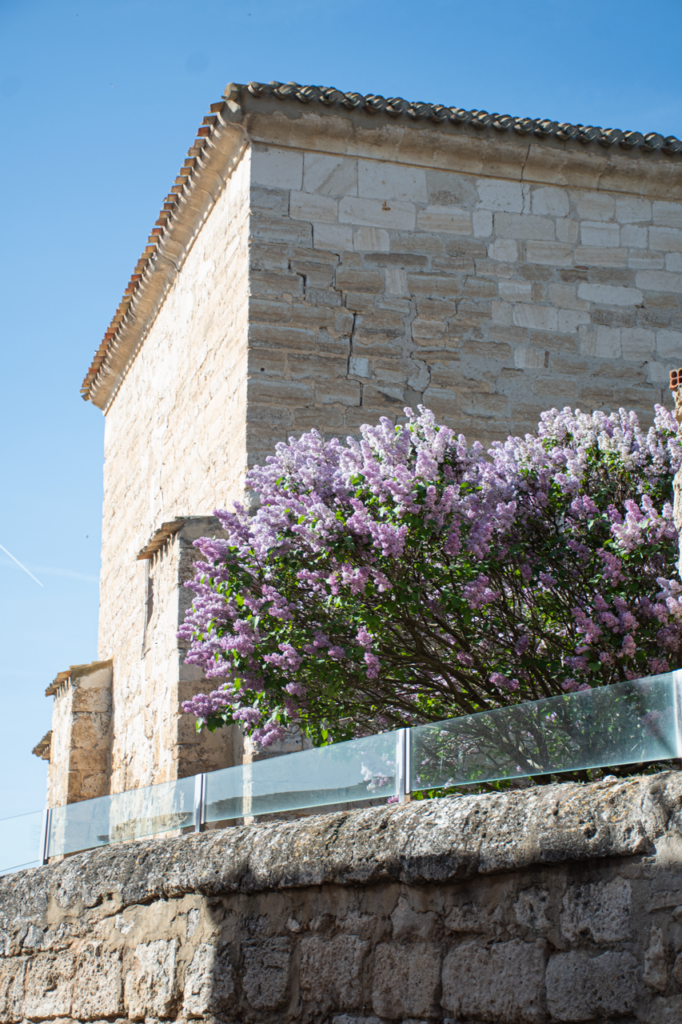
Muros de la iglesia de Nuestra Señora de la Asunción de Villaviudas. En primer término, lilas en plena floración.
Interior de la iglesia de Nuestra Señora de la Asunción de Villaviudas. Destacan sus yeserías barrocas en el techo y el retablo cubierto de pan de oro.
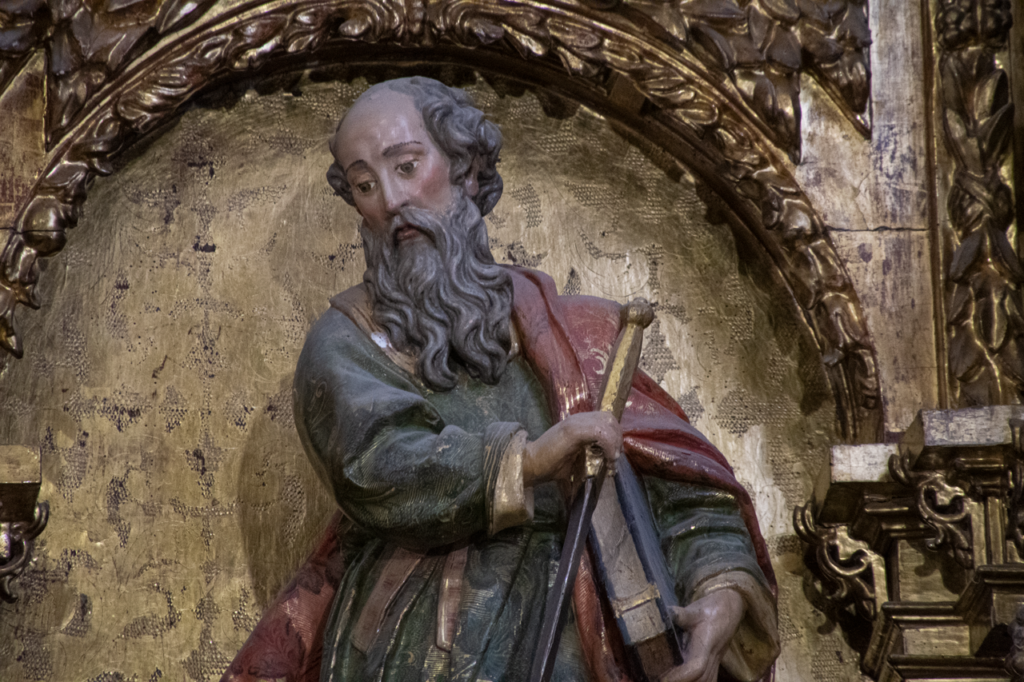
Detalle de la escultura de San Pablo del retablo mayor de la iglesia de Nuestra Señora de la Asunción de Villaviudas
Cristo crucificado gótico expuesto en uno de los muros de la Iglesia de Nuestra Señora de la Asunción de Villaviudas.
Panorámica aérea de Villaviudas, rodeado de campos de cultivo. Al fondo los páramos, sobre los que se alzan aerogeneradores.
Panorámica aérea de la iglesia de Nuestra Señora de la Asunción de Villaviudas. Hay un gran nido de cigüeña en lo alto de la torre, apoyado en la espadaña.
Muros de la iglesia de Nuestra Señora de la Asunción de Villaviudas. En primer término, lilas en plena floración.
Interior de la iglesia de Nuestra Señora de la Asunción de Villaviudas. Destacan sus yeserías barrocas en el techo y el retablo cubierto de pan de oro.
Detalle de la escultura de San Pablo del retablo mayor de la iglesia de Nuestra Señora de la Asunción de Villaviudas
Cristo crucificado gótico expuesto en uno de los muros de la Iglesia de Nuestra Señora de la Asunción de Villaviudas.

Location