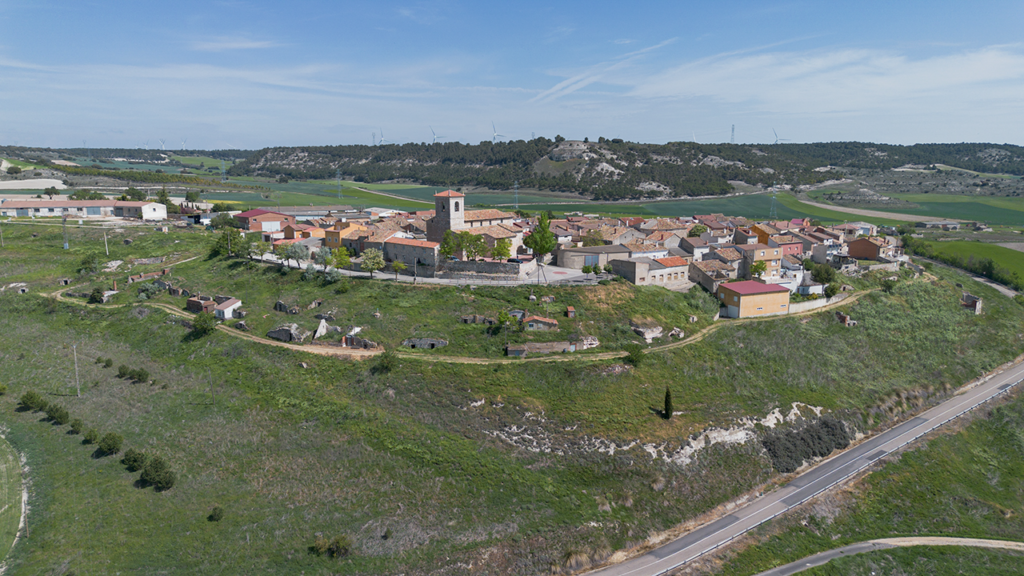
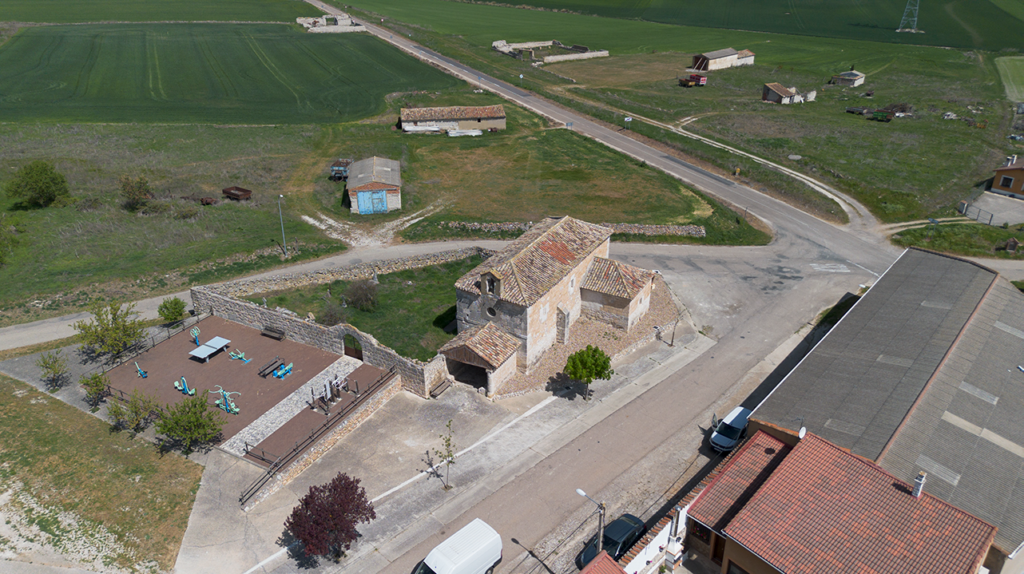
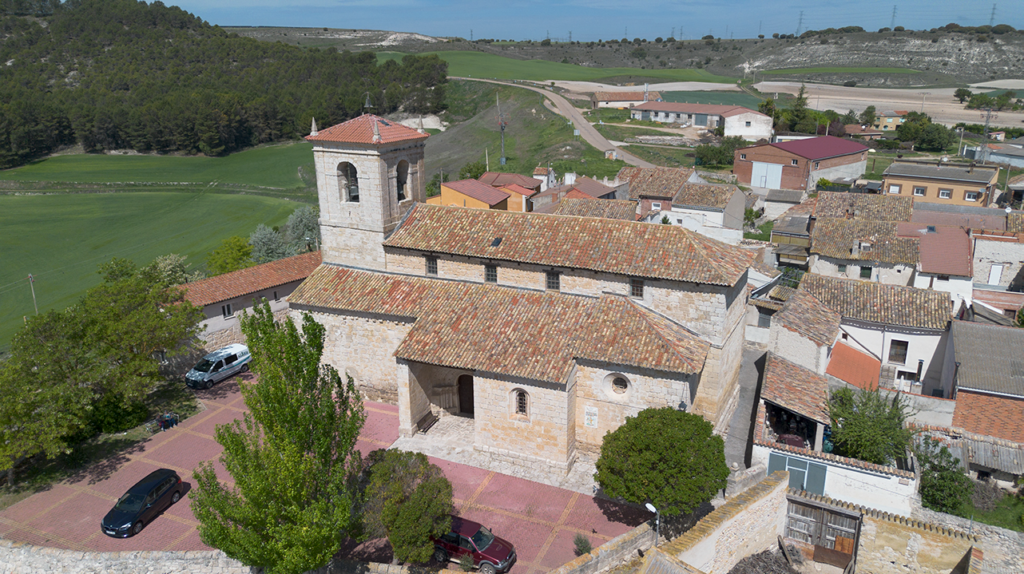
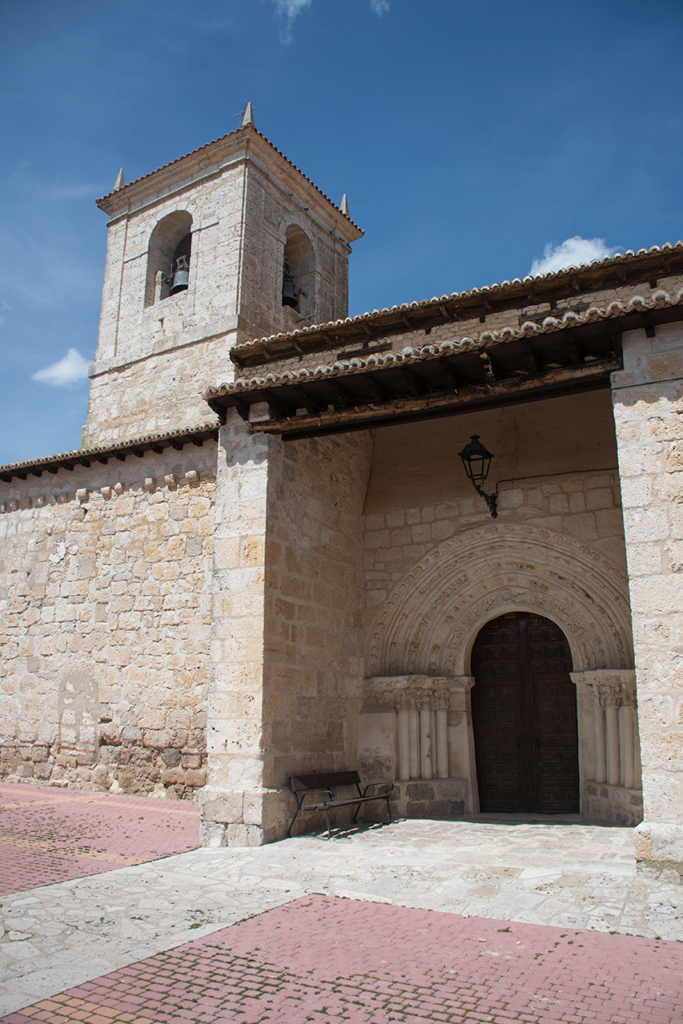
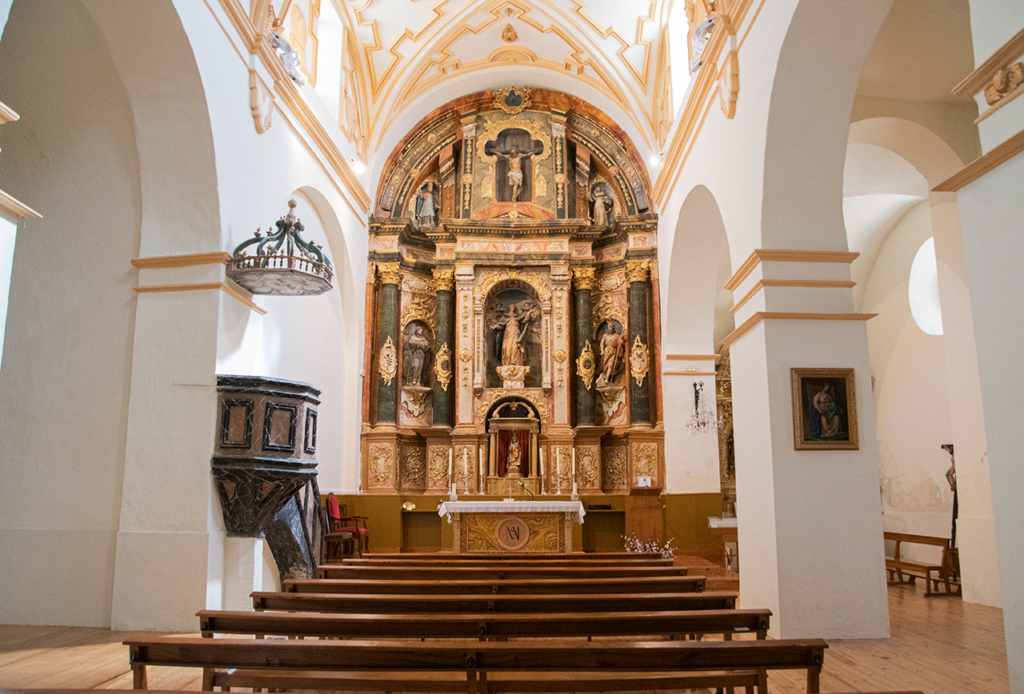
The Church of Saint Mary of the Assumption is one of the town’s most distinctive architectural landmarks. Its current layout dates from the 18th century, although it retains key features from its medieval past. Notable among these is the 13th-century Romanesque façade, an example of the transition to the Gothic style. It consists of five archivolts decorated with plant motifs, resting on jambs and highly eroded carved capitals, where some figures and scenes can still be recognised.
The church has a rectangular floor plan with two naves of three bays and a straight chevet. Much of the 18th-century work affected the epistle nave, where three chapels were added, connected to the central nave by semicircular arches supported by square pillars. Also dating from this period are the western gable, the north wall, the baptistery and the stuccoed brick roofs.
Despite these alterations, several original roofs have been preserved. The main chapel and the sacristy retain simple ribbed vaults from the medieval period. Two other chapels feature trefoil vaults, characteristic of 16th-century Gothic development.
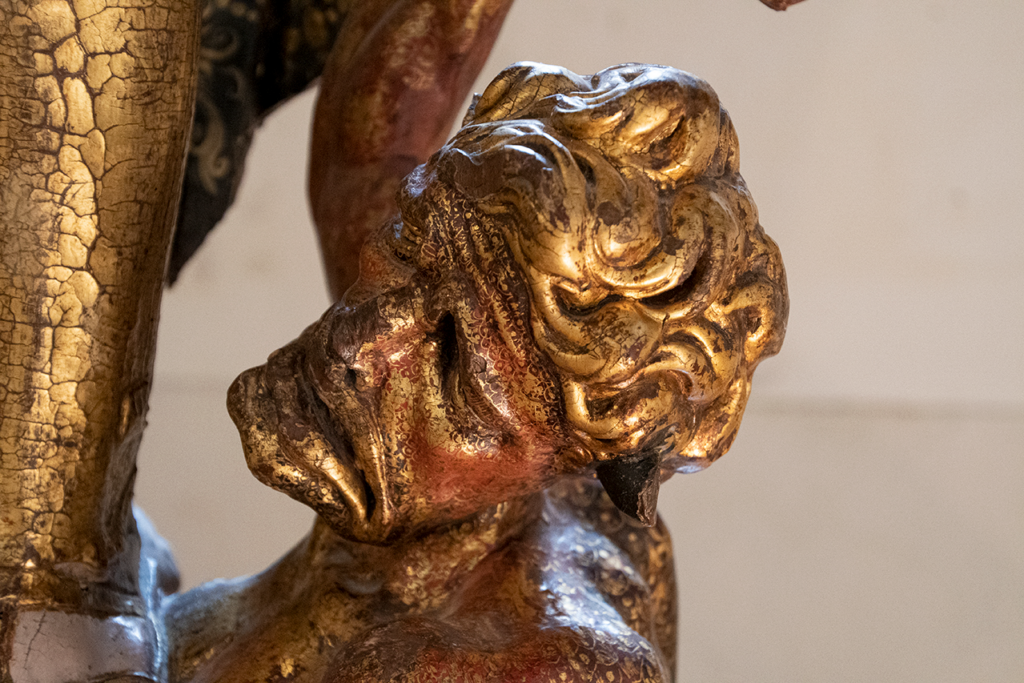
Inside, several works of art are worthy of note. On the Gospel side, there is a Baroque altarpiece dating from 1744 and a 12th-century Gothic Virgin. On the Epistle side, there is a notable sculpture of Saint Michael the Archangel, created by Francisco Giralte, one of the leading sculptors of the Castilian Renaissance.