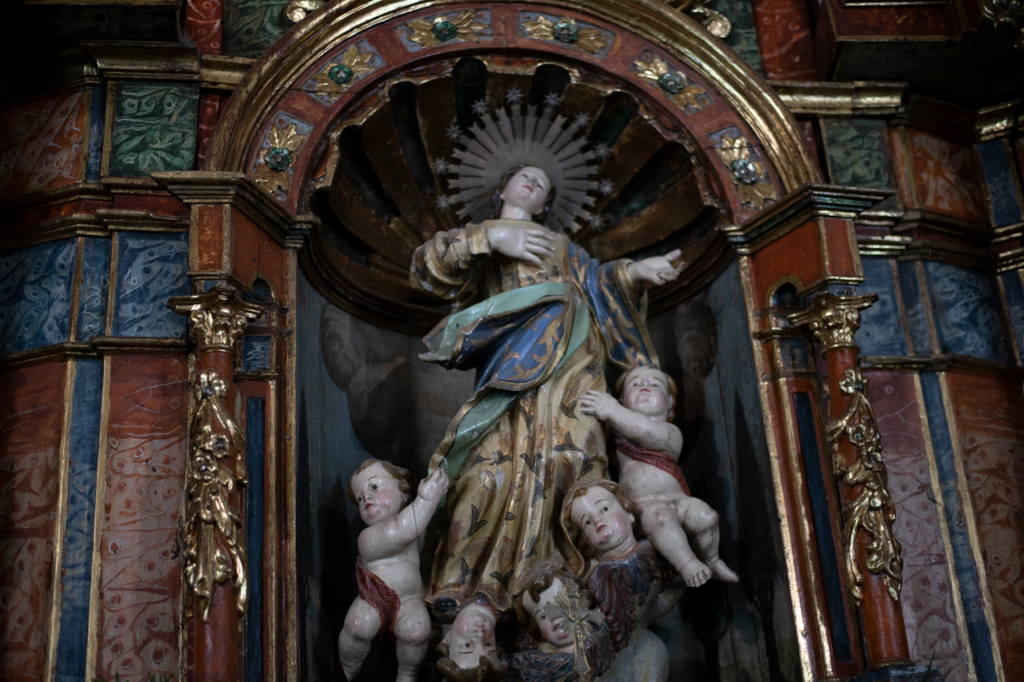
The origins of the primitive church of Saint Mary of the Assumption date back to the Middle Ages, when a building—possibly Romanesque—was erected. Hardly any traces of that structure remain.
The present church began to take shape in the 16th century and underwent extensive alterations during the 17th and 18th centuries, adopting the sober and balanced style of the Castilian rural Baroque.
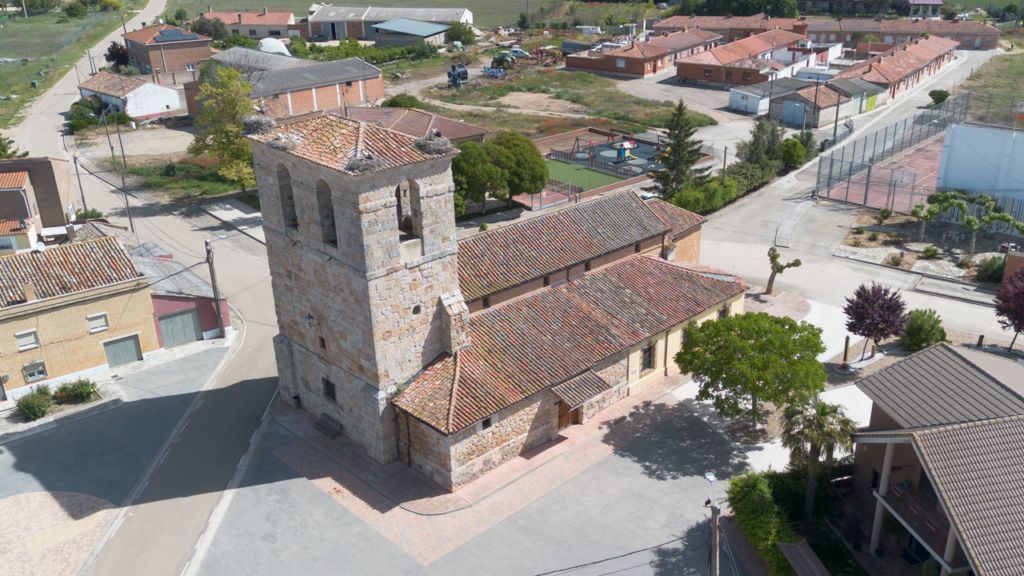
From the outside, its elongated rectangular floor plan, topped by a semicircular chevet, stands out, as does the tower, situated at the foot of the church, which extends beyond the width of the nave and serves as a visual landmark for the hamlet. The entrance portal opens onto the south side, next to the former rectory.
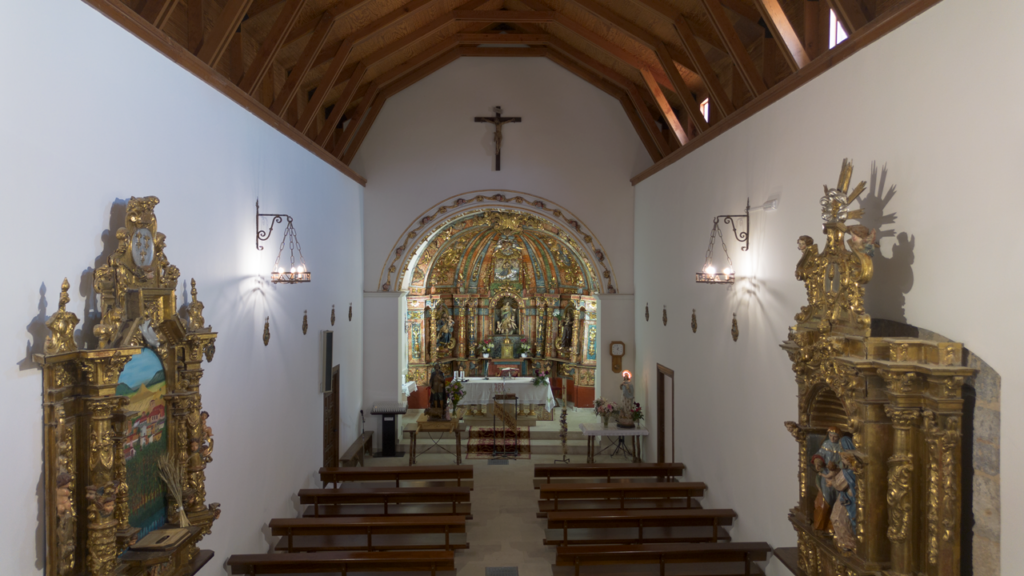
The interior is surprising because of its sense of spaciousness. The single nave is covered by a flat ceiling adorned with 18th-century plasterwork, which lends rhythm and clarity to the space. Lower down, one exceptional feature that remains is a choir screen supported by a star-ribbed vault, connecting the building to its medieval past.
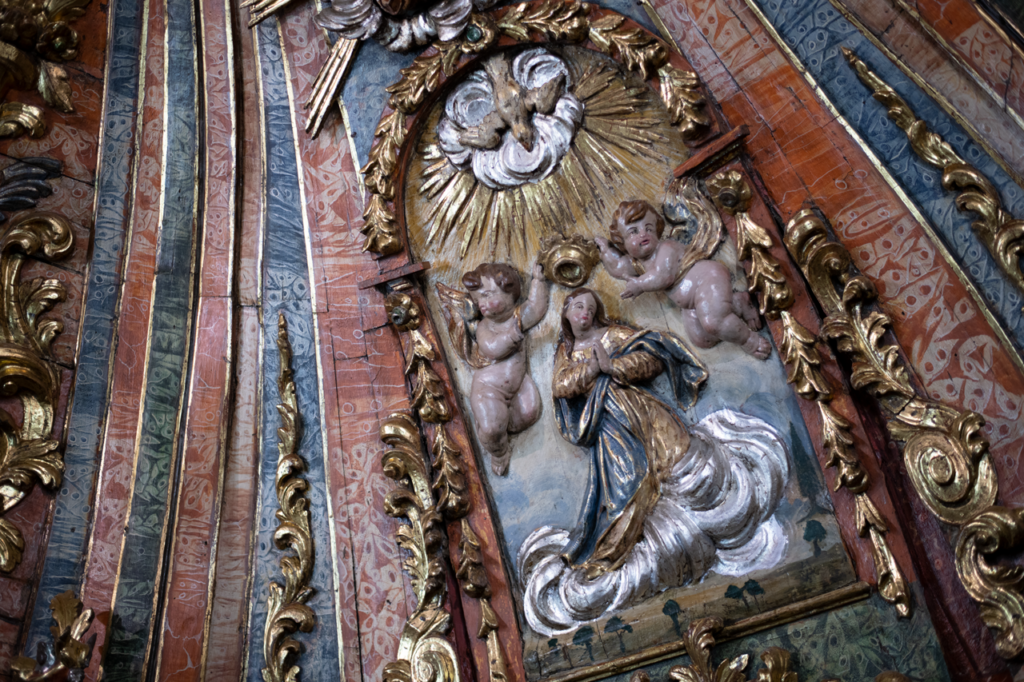
Three Baroque altarpieces complete the ensemble, with the one on the high altar—dedicated to the Assumption—being particularly noteworthy; its iconography and gilding illuminate the chevet of the church.