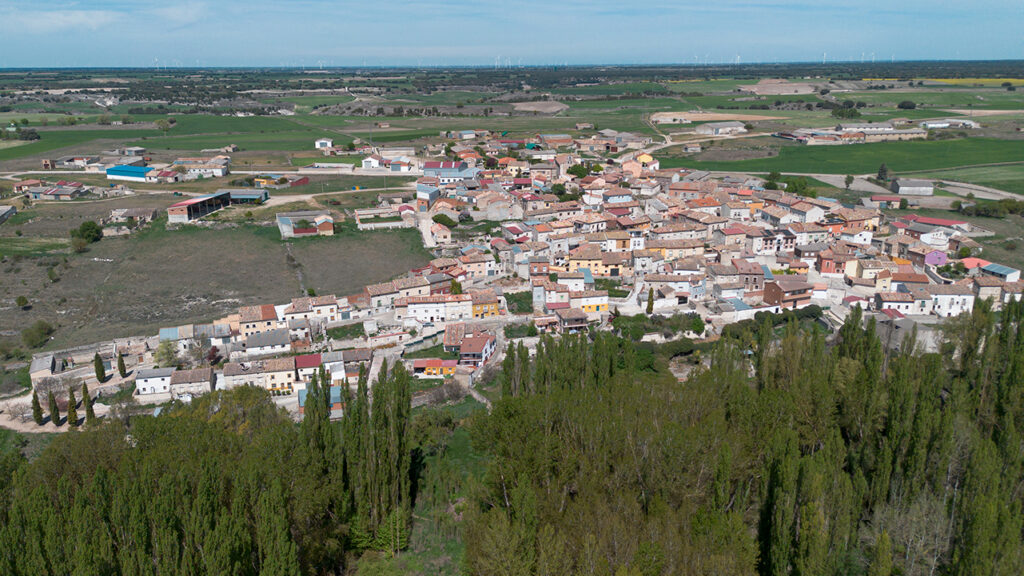
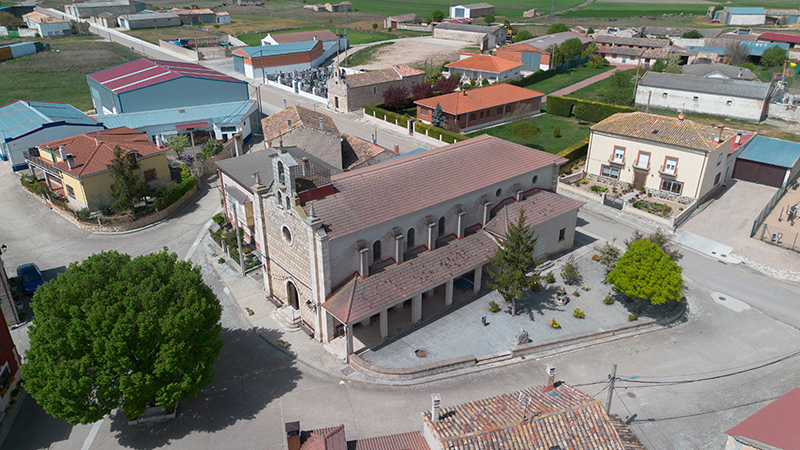
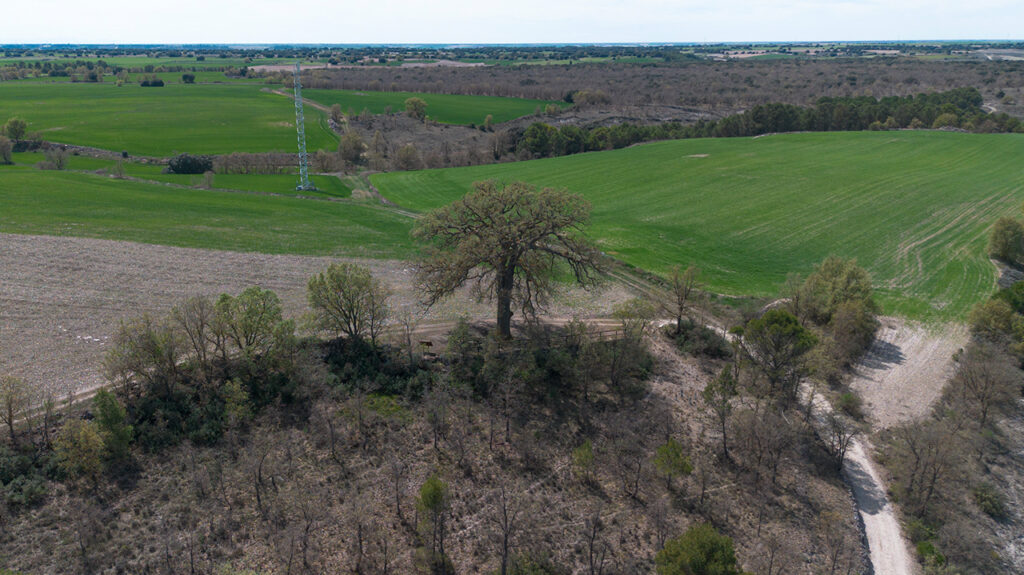
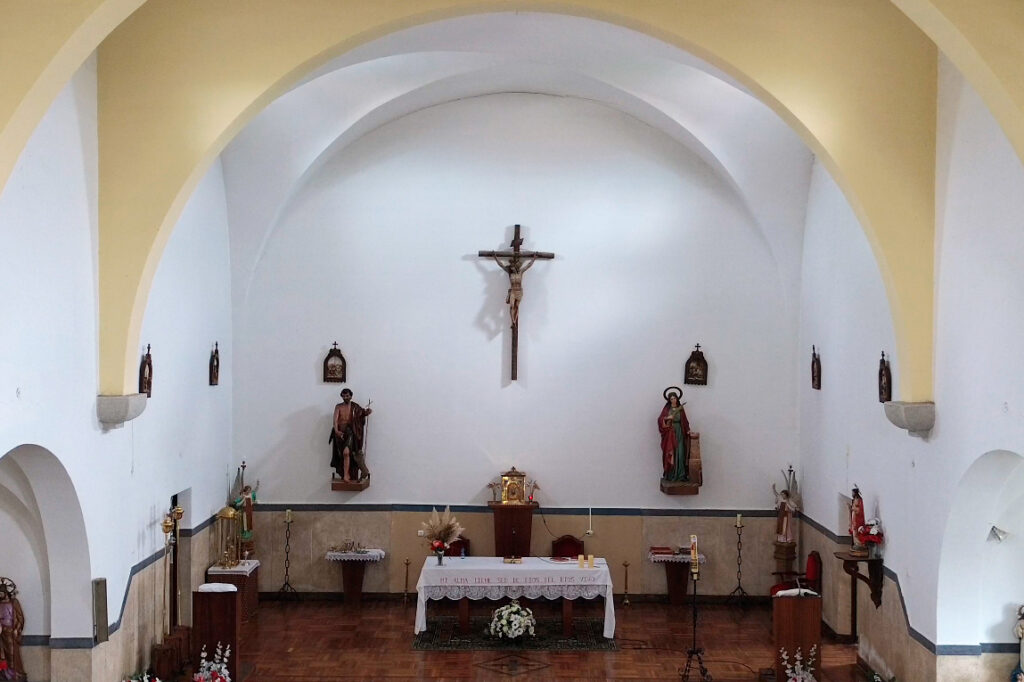
On the outskirts of Hérmedes de Cerrato stands the chapel of Santa María de las Heras, or de la Era, one of the most distinctive heritage sites in the Cerrato region. Its importance was recognised in 1931, when it was declared a Historic-Artistic Monument due to its unique architectural features and exceptional character.
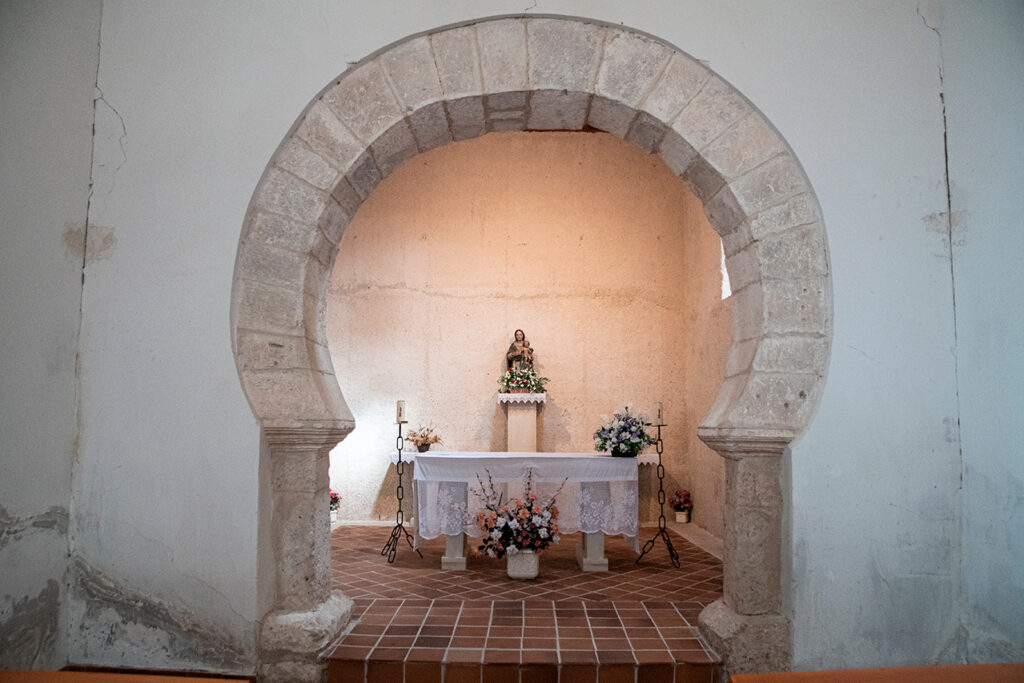
The origins of the church date back to the 10th century, at the height of the pre-Romanesque period. A surviving feature from that time is an imposing horseshoe-shaped triumphal arch, a Mozarabic structure formed of irregular voussoirs and bearing traces of polychromy, which separates the nave from the main chapel.
The floor plan consists of a single nave, built of stone masonry and rough ashlar, and has an unusual characteristic: it is oriented north to south, contrary to most Christian churches, which have their chevet at the east end. This unique orientation adds a distinctive nuance to its historical interpretation.
During the 18th century, the chapel underwent extensive renovation and the current chevet was built, along with the bell gable crowning the façade. Inside, there is also a Mozarabic alabaster capital, reused as a holy water font, another direct remnant of the original church.